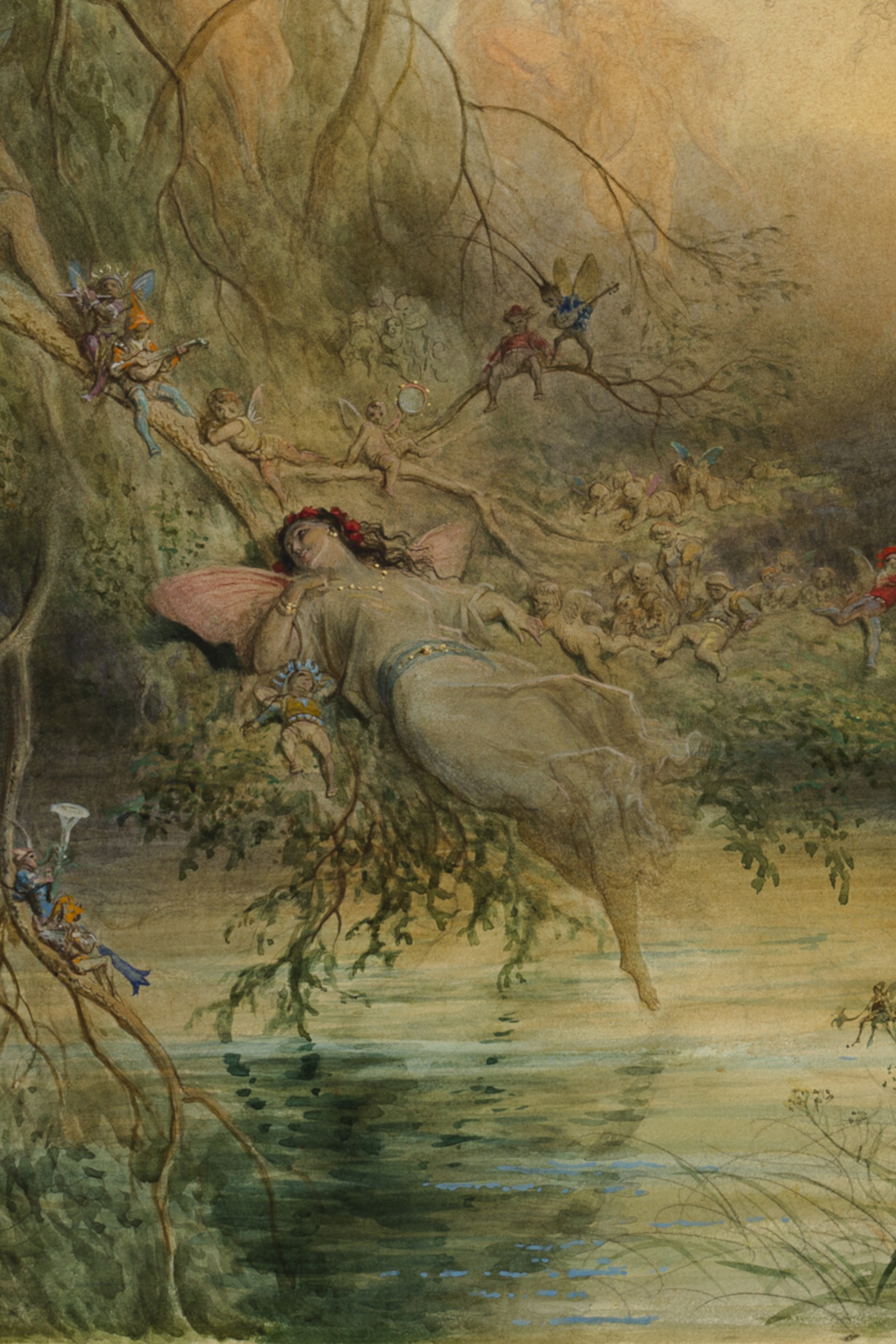
The Windfairies
What is The Windfairies about?
"The Windfairies" is a Victorian fairy tale by Mary De Morgan (1850–1907), one of the leading writers of literary fairy tales in nineteenth-century Britain. The story follows Lucilla, a young girl raised in a clifftop windmill by her widowed miller father. Isolated from other children and left largely to her own devices, Lucilla encounters a group of ethereal wind spirits who appear at midnight, dancing among the spinning sails. The fairies draw her into their world, setting in motion a narrative about the tension between the human realm and the enchanted one. De Morgan's tale belongs to the tradition of the Victorian literary fairy story, a form that distinguished itself from oral folklore by using carefully crafted prose and layered moral meaning. Like her contemporaries George MacDonald and Oscar Wilde, De Morgan employed fantastical elements to examine questions of belonging, loneliness, and the responsibilities that come with enchantment. The windmill setting — positioned between land and sea, labour and wonder — functions as a liminal space where ordinary life and supernatural visitation intersect. The story's brevity and directness make it accessible to readers of all ages, while its imagery rewards closer literary attention. First published in the collection "On a Pincushion and Other Fairy Tales" (1877), the story remains a representative example of the female-authored Victorian fairy tale tradition.
Main themes in The Windfairies
Childhood solitude and longing for companionship
The presence of childhood solitude and longing for companionship in The Windfairies connects readers to its enduring relevance.
The boundary between the human and supernatural worlds
The presence of the boundary between the human and supernatural worlds in The Windfairies connects readers to its enduring relevance.
Liminal spaces and transitional states
The theme of liminal spaces and transitional states weaves through The Windfairies, adding depth to its narrative.
Enchantment and its consequences
The presence of enchantment and its consequences in The Windfairies connects readers to its enduring relevance.
Why The Windfairies is still relevant today
"The Windfairies" speaks to enduring concerns about childhood solitude, the search for companionship, and the boundaries between the familiar and the unknown. In an era of renewed interest in folklore, folk horror, and pre-Raphaelite aesthetics, De Morgan's work has attracted fresh academic and popular attention. The story's isolated protagonist navigating encounters with non-human beings anticipates later fantasy literature for younger readers, making it a useful point of comparison for students of the genre. De Morgan's position as a woman writer working in a form typically dominated by male collectors and male-authored canonical texts also gives the story contemporary relevance in discussions of gender and Victorian literary history. Readers interested in the roots of modern fantasy, in nature-based mythology, or in the cultural history of childhood will find the story a compact and rewarding text. It is available to read in full on TextStack without registration.
More by this author
Frequently Asked Questions
What is The Windfairies about?
The Windfairies is a short Victorian fairy tale by Mary De Morgan about a girl named Lucilla who lives alone with her miller father in a windmill by the sea. One night she encounters a group of wind fairies dancing among the sails, and their meeting sets the story's events in motion. The tale combines themes of childhood isolation, enchantment, and the interaction between the human world and the supernatural.
Is The Windfairies difficult to read?
No. De Morgan wrote in clear, accessible Victorian prose suited to readers of a wide range of ages. The vocabulary is straightforward and the narrative moves quickly, making it suitable for older children, students, and adult readers with no specialist background in Victorian literature.
How long does it take to read The Windfairies?
The Windfairies is a short story and can be read in approximately fifteen to twenty minutes. The complete text is available on TextStack, where you can read it in your browser or save it to your library for offline reading.
What are the main themes in The Windfairies?
The central themes include childhood solitude and the desire for companionship, the crossing of boundaries between the human and magical realms, and the power of natural forces as agents of wonder. The windmill setting reinforces the story's preoccupation with liminal spaces — places that stand between everyday life and something stranger and less governed by ordinary rules.