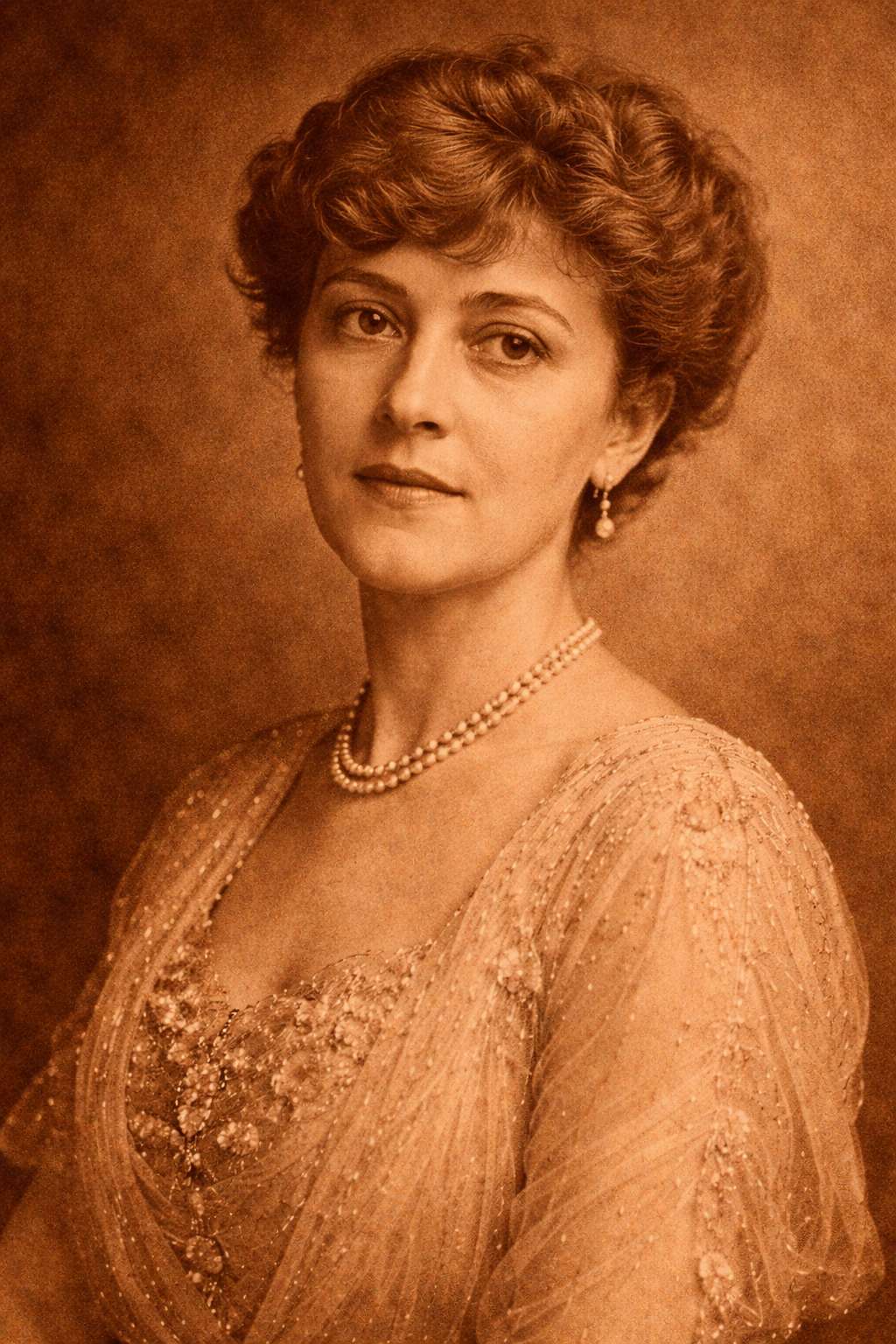
Edith Wharton
Biography
Edith Wharton (1862–1937), born Edith Newbold Jones in New York City, was an American novelist, short story writer, and essayist whose work examined the social customs, moral codes, and economic pressures of the American upper class during the Gilded Age and early twentieth century. She was raised in one of New York's established families — the phrase keeping up with the Joneses is sometimes attributed to her relatives — and received a private education that included extensive travel in Europe and immersion in her father's library. Wharton began publishing poetry and fiction in her twenties, but her first major work of fiction, The House of Mirth (1905), established her reputation. The novel traces the social decline and eventual death of Lily Bart, a young woman navigating the marriage market of Old New York, and is noted for its precise dissection of class dynamics and the limited options available to women within that milieu. In 1907, Wharton moved permanently to France, where she maintained residences in Paris and the countryside. During World War I, she organized relief efforts for refugees, established workrooms for unemployed women, and operated hostels for displaced families, earning the French Legion of Honor for her humanitarian work. The Age of Innocence (1920), set in 1870s New York society, won the Pulitzer Prize for Fiction in 1921, making Wharton the first woman to receive the award. The novel examines the tension between individual desire and social conformity through the story of Newland Archer and his entanglement with the unconventional Countess Ellen Olenska. Other notable works include the novellas Ethan Frome (1911) and Summer (1917), both set in rural New England and departing from her usual urban settings, as well as The Custom of the Country (1913) and The Reef (1912). Wharton also published significant nonfiction, including The Decoration of Houses (1897), co-authored with architect Ogden Codman Jr., and the memoir A Backward Glance (1934). Wharton produced over forty books during her career, including novels, short story collections, travel writing, and criticism. She died at her home in Saint-Brice-sous-Forêt, France, in August 1937. Her work is recognized for its formal craftsmanship, ironic narrative voice, and ethnographic detail in depicting American social stratification.
Common themes in Edith Wharton's work
Gilded Age society
A recurring theme throughout Edith Wharton's writing.
Women and convention
A recurring theme throughout Edith Wharton's writing.
Wealth and morality
A recurring theme throughout Edith Wharton's writing.
Old New York
A recurring theme throughout Edith Wharton's writing.
Books


Explore by genre
Other authors you may enjoy
Why Edith Wharton is still read today
Edith Wharton (1862-1937) was the first woman to win the Pulitzer Prize for Fiction with "The Age of Innocence" and remains the definitive chronicler of Gilded Age New York society. Her novels examine with surgical precision the constraints placed on women by wealth, class, and convention. From the tragic fate of Lily Bart in "The House of Mirth" to the devastating irony of "The Age of Innocence," Wharton combined psychological insight with social criticism that anticipated modern feminism. Her friendship with Henry James influenced her craft, but her distinctively American voice and her understanding of women's position made her work uniquely her own.
Frequently Asked Questions
Why is Edith Wharton important?
Wharton was the first woman to win the Pulitzer Prize for Fiction and remains the definitive chronicler of Gilded Age New York. Her psychological insight and social criticism influenced generations of writers and anticipated feminist concerns.
What is Gilded Age fiction?
Fiction set in late 19th-century America when industrial fortunes created a wealthy elite with elaborate social codes. Wharton knew this world intimately and portrayed its beauty and cruelty with insider knowledge.
What was Wharton's relationship with Henry James?
They were close friends who influenced each other's work. James helped refine her craft, while she admired his psychological depth. Both wrote about Americans and Europeans, though Wharton's voice was distinctly her own.
What is Wharton's best novel?
The Age of Innocence won the Pulitzer and is often considered her finest work. The House of Mirth is equally acclaimed for its tragic portrait of Lily Bart. Ethan Frome is her most powerful short work.
Did Wharton write from personal experience?
Yes—born into New York's aristocracy, she knew the world she portrayed intimately. Her unhappy marriage and later divorce informed her understanding of women's constrained choices.
Essential cookies keep you signed in and save your reading progress. Analytics cookies help us understand how the site is used. You can reject analytics — we still work without them. Learn more in our Privacy Policy.