Hudson River Bracketed
What is Hudson River Bracketed about?
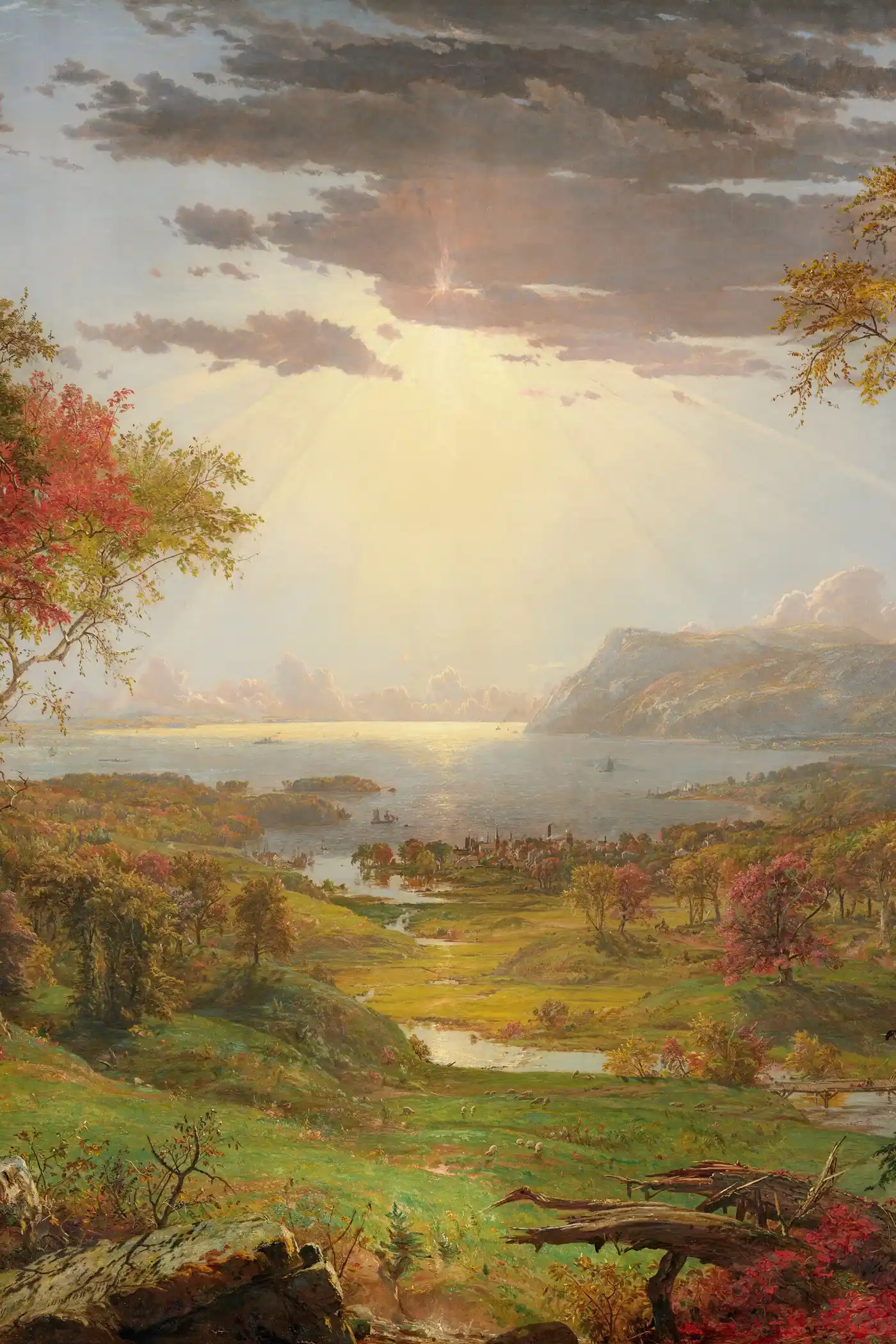
Nineteen-year-old Vance Weston has grown up in the fictional Midwestern town of Euphoria, Illinois. Though under pressure to join his father in real estate, Vance aspires to be a poet. After falling ill just as he is supposed to choose his profession, he convalesces for a while at home until a doctor suggests time away in a better climate would aid his recovery. Vance chooses to stay with relatives, the Tracys, in a small town not far from New York City; his hope is that he might be able to visit the latter during his stay and get his foot in the door of the literary world. The Tracys are caretakers for an old house owned by the much wealthier Spear family. Vance accompanies his cousins to the house, which is in the titular Hudson River Bracketed architectural style. In its library he meets a young woman from the Spear family, Heloise, known as “Halo.” This chance encounter is the first in a series of coincidences that will enable Vance’s writerly dreams to take shape. Hudson River Bracketed differs from most of Edith Wharton’s novels in that its protagonist is both male and materially disadvantaged. Having distanced the main character from her own life in these two respects, Wharton allowed herself, it’s widely thought, to be more freely autobiographical in portraying her experiences as a fledgling novelist. The novel is generally appreciated not so much for the depth of its characters, which one contemporary reviewer in the New Statesman said resembled “marionettes,” but for the light it sheds on Wharton’s own creative process of fiction writing, and her attitude towards the mercenary side of publishing—including the exploitation of new writers as a commercial strategy. Also notably explored are the many human factors that affect the awarding of literary prizes like the Pulitzer Prize for Fiction , which Wharton won in 1921 for The Age of Innocence and which explicitly appears in the novel as the “Pulsifer Prize.” Other themes of the book are the effects of social class and material resources on literary achievement; religious and publishing trends; marriage and divorce; and the majesty of the natural environment, in particular the Hudson River Valley. In connection with this last focus, scholar Judith Saunders has also argued that the book is an extended meditation on the poem “Kubla Khan” by Samuel Taylor Coleridge , which is the subject of Vance and Halo’s first verbal exchange. Hudson River Bracketed was first serialized without Wharton’s permission in 1928, resulting in a frenzied rush to finish it, which biographers speculate may have contributed to the illnesses of her final years. The novel was published in its entirety in 1929, when Wharton was 67. It’s her longest novel, and among the five she consistently listed as her favorites within her oeuvre. Biographer R. W. B. Lewis reports her having said: “I am sure it is my best book.” Critics and readers didn’t agree; it has never been popular. However, even its detractors admire her rich descriptions of the Hudson River Valley setting. Wharton published a sequel to Hudson River Bracketed in 1932, five years before her death at 75.
Main themes in Hudson River Bracketed
American literary culture
In Hudson River Bracketed, american literary culture provides a lens for understanding the story's core message.
Art and commerce
The presence of art and commerce in Hudson River Bracketed connects readers to its enduring relevance.
Midwest versus East
The presence of midwest versus east in Hudson River Bracketed connects readers to its enduring relevance.
Tradition and innovation
Tradition and innovation emerges as a defining element in Hudson River Bracketed, shaping character development.
Why Hudson River Bracketed is still relevant today
Hudson River Bracketed (1929) follows Vance Weston, a young midwesterner discovering the weight of American cultural tradition in the East. The novel examines the American writer's relationship to tradition, the conflict between commercial and artistic values, and the development of an artist's sensibility. It represents Wharton's meditation on American literary culture and her own artistic credo.
More by this author
Frequently Asked Questions
What is Hudson River Bracketed about?
Vance Weston, a young writer from the Midwest, comes East and discovers American tradition in an old Hudson River house. His artistic development, marriages, and struggles between commercial and serious writing form the narrative.
What does the title mean?
Hudson River Bracketed refers to an architectural style popular along the Hudson River in the mid-19th century. The old house in this style represents the cultural tradition Vance discovers and must absorb.
Is this autobiographical?
Vance's artistic struggles and his sense of discovering tradition reflect Wharton's own concerns as a writer. The novel explores questions about American culture and artistic vocation that preoccupied her throughout her career.
Does this have a sequel?
Yes—The Gods Arrive (1932) continues Vance's story. Together they form Wharton's most extensive exploration of the artist's life and the demands of serious literary work.