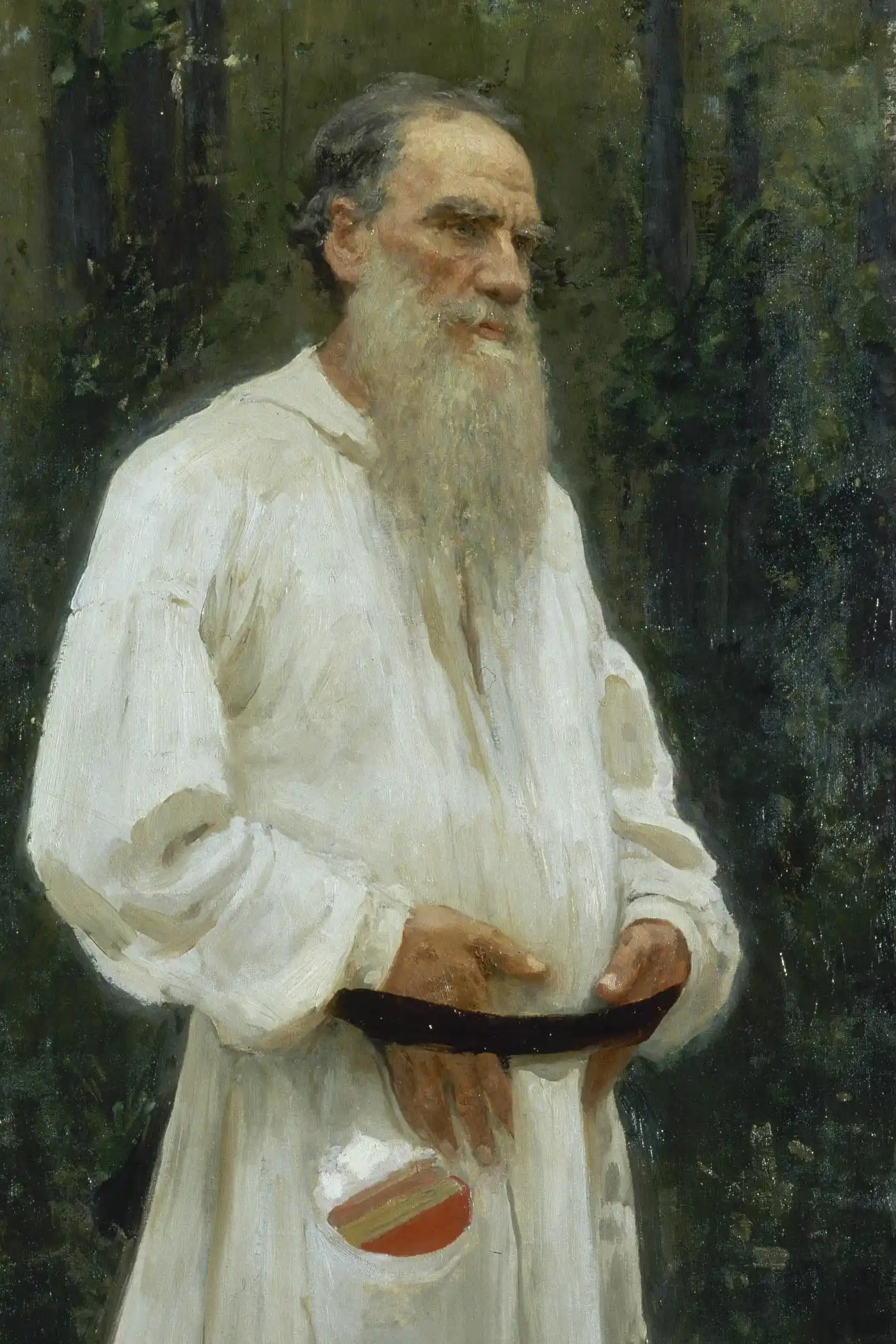
A Confession
What is A Confession about?
Leo Tolstoy wrote this short meditation on sadness and the meaning of life when he was middle aged. He had already completed his masterworks, Anna Karenina and War and Peace , reared fourteen children, and gained fame and acclaim in Russia as a man of letters. But despite having attained that success, he still found himself unhappy and always returning to the disturbing idea that all achievement is meaningless. A Confession is his attempt to put these thoughts in words as he teetered on the brink of suicide. It forms the first in a four-volume series that included A Criticism of Dogmatic Theology , The Gospel in Brief , and What I Believe (also known as My Religion or My Faith ).
Main themes in A Confession
Existential crisis
Existential crisis emerges as a defining element in A Confession, shaping character development.
Search for meaning
A Confession thoughtfully explores search for meaning through its central conflicts.
Faith and doubt
The presence of faith and doubt in A Confession connects readers to its enduring relevance.
Death and mortality
A Confession thoughtfully explores death and mortality through its central conflicts.
Why A Confession is still relevant today
A Confession is Tolstoy's spiritual autobiography, describing the existential crisis that transformed his life and thought. Despite fame and success, he confronted the meaninglessness of life without faith. The work influenced existentialist philosophy and remains a powerful meditation on mortality and meaning.
More by this author


Frequently Asked Questions
What is A Confession about?
Tolstoy describes his psychological crisis in his 50s when, despite wealth and fame, life seemed meaningless. He contemplated suicide before finding salvation in a simplified Christianity emphasizing love and rejecting church doctrine.
Is A Confession philosophy or autobiography?
Both—Tolstoy traces his personal journey while engaging philosophical questions about meaning, death, and faith. The personal narrative gives abstract questions urgency and authenticity.
How does A Confession relate to Tolstoy's other works?
A Confession marks the divide between Tolstoy the novelist and Tolstoy the religious thinker. Written after Anna Karenina, it explains the spiritual concerns that dominate his later writing and led him to reject much of his earlier fiction.
Is A Confession religious?
Yes, but unconventionally. Tolstoy rejects institutional Christianity while embracing Jesus's ethical teachings. His religion is more philosophical than dogmatic—focused on how to live rather than what to believe.