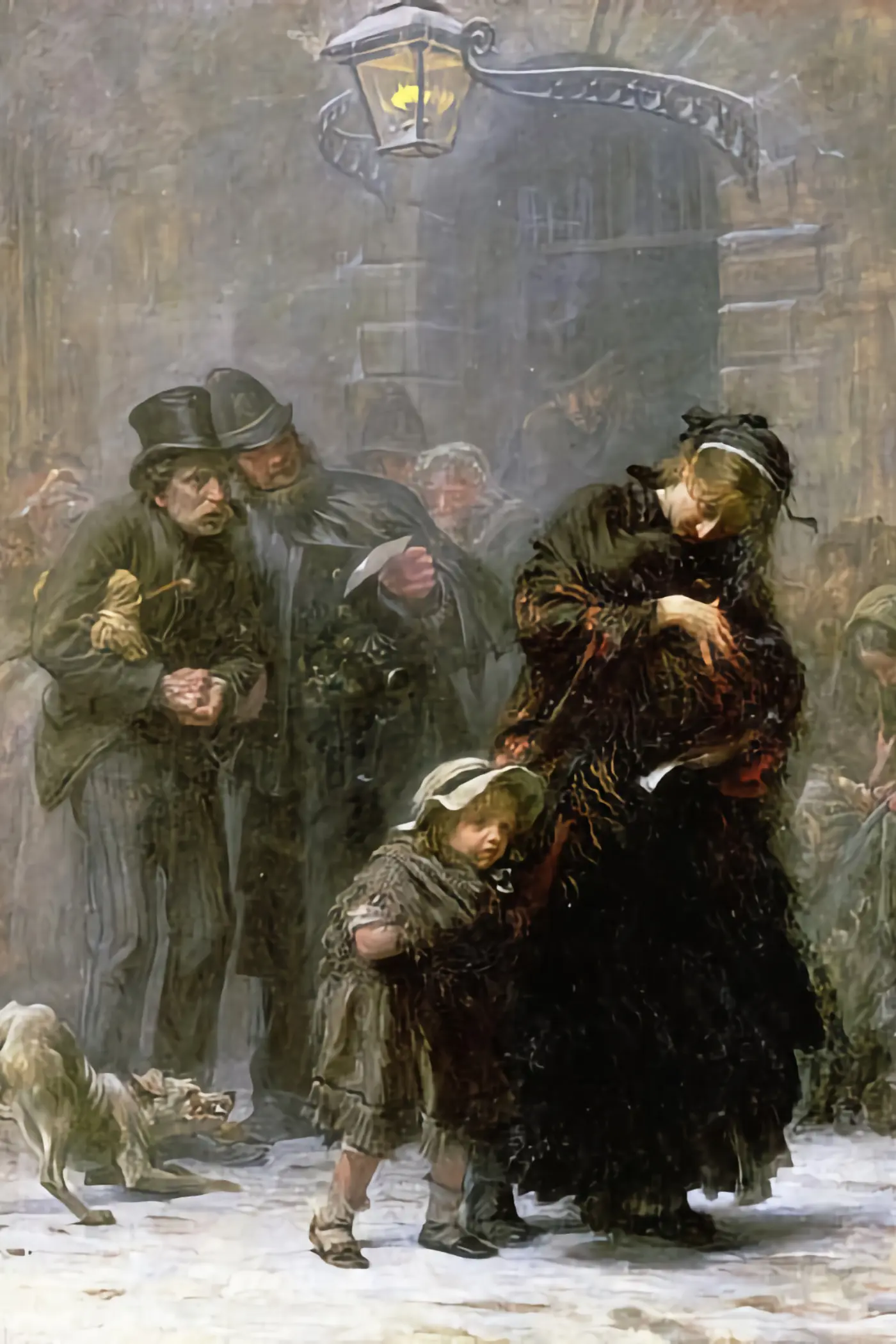
Little Dorrit
What is Little Dorrit about?
Little Dorrit , like many of Charles Dickens’ novels, was originally published in serial form over a period of about 18 months, before appearing in book form in 1857. The novel focuses on the experiences of its protagonist Arthur Clenham, who has spent some twenty years in China helping his father run the family business there. After his father dies, Arthur returns home to London. His mother gives him little in the way of welcome. She is a cold, bitter woman who has brought Arthur up under a strict religious regime concentrating on the punitive aspects of the Old Testament. Despite this upbringing, or perhaps in reaction to it, Arthur is a kind, considerate man. He is intrigued by a slight young woman he encounters working as a part-time seamstress for his mother, whom his mother calls simply “Little Dorrit.” Arthur senses some mystery about her mother’s employment of Little Dorrit, and proceeds to investigate. There are several subplots and a whole host of characters. Compared to some of Dickens’ work, Little Dorrit features a good deal of intrigue and tension. There are also some strong strands of humor, in the form of the fictional “Circumlocution Office,” whose sole remit is “How Not To Do It,” and which stands in the way of any improvement of British life. Also very amusing are the rambling speeches of Flora, a woman with whom Arthur was enamored before he left for China, but whose shallowness he now perceives only too well. Little Dorrit has been adapted for the screen many times, and by the BBC in 2010 in a limited television series which featured Claire Foy as Little Dorrit, Matthew Macfayden as Arthur Clenham, and Andy Serkis as the villain Rigaud.
Main themes in Little Dorrit
Imprisonment and freedom
Imprisonment and freedom emerges as a defining element in Little Dorrit, shaping character development.
Bureaucracy and obstruction
In Little Dorrit, bureaucracy and obstruction provides a lens for understanding the story's core message.
Wealth and poverty
The presence of wealth and poverty in Little Dorrit connects readers to its enduring relevance.
Duty and devotion
In Little Dorrit, duty and devotion provides a lens for understanding the story's core message.
Why Little Dorrit is still relevant today
Little Dorrit's attack on bureaucratic obstruction feels remarkably contemporary. The Circumlocution Office, dedicated to preventing anything from being accomplished, resonates with anyone who has struggled against institutional inertia. The novel's exploration of how imprisonment takes many forms—and how wealth can be as confining as poverty—offers sophisticated psychological insight. Its meditation on duty, love, and the courage of ordinary goodness makes it one of Dickens's most rewarding works for attentive readers.
More by this author
Frequently Asked Questions
What is Little Dorrit about?
Little Dorrit follows Amy Dorrit, born in a debtors' prison, and Arthur Clennam, returned from abroad. Their stories interweave with Dickens's satire of government bureaucracy and exploration of different kinds of imprisonment.
What is the Circumlocution Office?
The Circumlocution Office is Dickens's satirical government department devoted to 'How Not To Do It'—endless delays and obstruction. It represents bureaucratic incompetence and remains a powerful symbol of institutional failure.
What is the Marshalsea?
The Marshalsea was a real London debtors' prison where Dickens's own father was imprisoned. In the novel, the Dorrit family has lived there for over twenty years.
Who is Little Dorrit?
Amy 'Little Dorrit' Dorrit is a young woman of quiet goodness and self-sacrifice, born in prison and devoted to her ungrateful family. She represents moral constancy amid corruption.
Is Little Dorrit difficult to read?
Little Dorrit is complex, with multiple plots and darker themes than some Dickens novels. However, its psychological depth and satirical power reward patient readers.