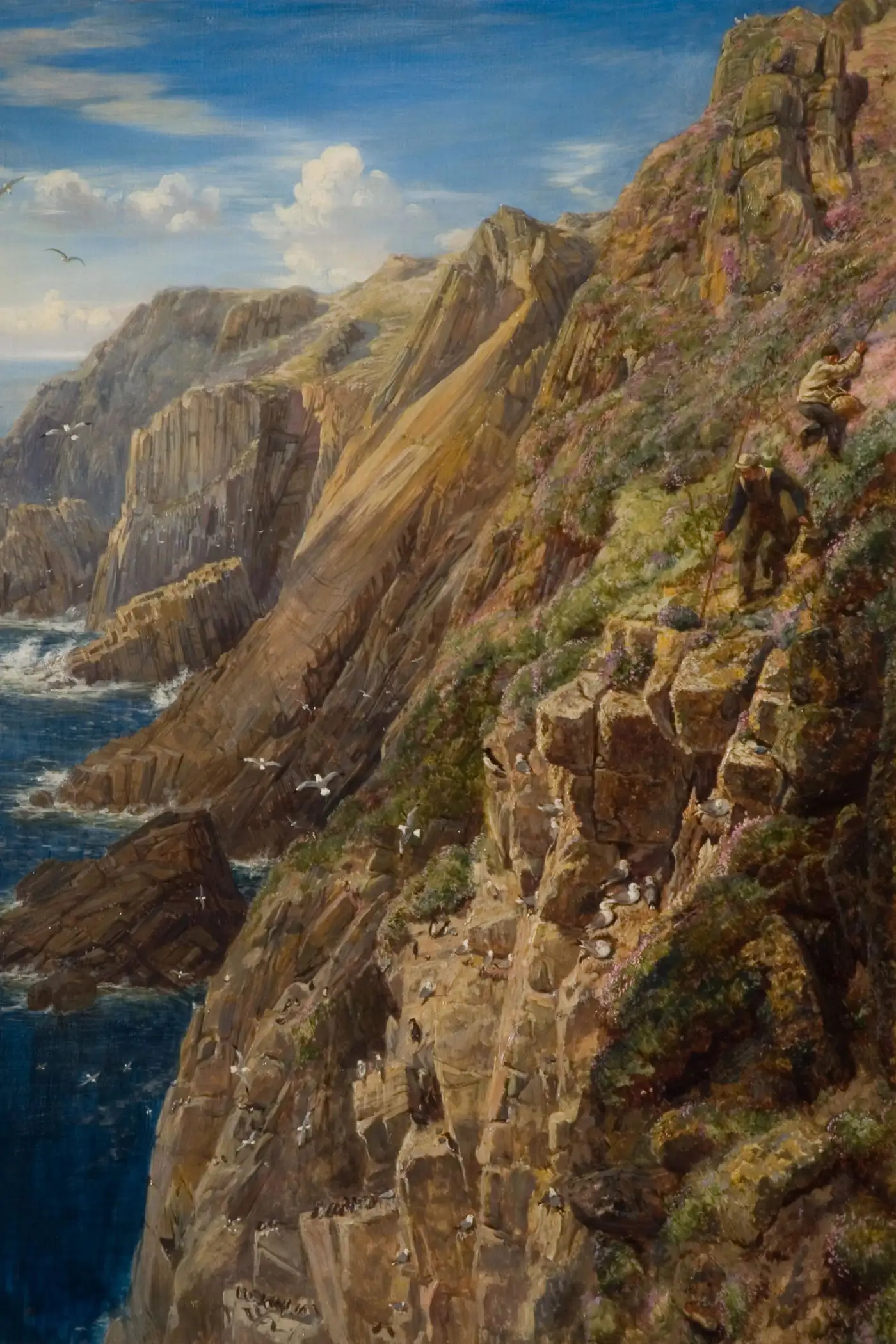
The Land That Time Forgot
What is The Land That Time Forgot about?
The Land That Time Forgot, published in 1918, is the first novel in Edgar Rice Burroughs's Caspak trilogy. During World War I, American Bowen Tyler and a group of Allied and German survivors find themselves aboard a captured German U-boat that drifts to the mysterious island of Caprona, known to its inhabitants as Caspak. This island, surrounded by towering cliffs, harbors a complete evolutionary chain existing simultaneously: from primitive single-celled organisms and dinosaurs through increasingly advanced humanoid species living in different regions. As the castaways explore inland, they encounter each stage of evolution in geographic sequence, from reptilian beasts to Neanderthal-like men to more advanced tribes. Tyler and his companions must survive attacks from prehistoric predators and hostile humanoids while searching for a way to escape the island and signal for rescue. The novel's unique premise of parallel evolution occurring across geography rather than time makes Caspak one of Burroughs's most original creations. The Land That Time Forgot is a gripping survival adventure that blends wartime tension with lost-world discovery.
Main themes in The Land That Time Forgot
Evolution and the stages of life
The presence of evolution and the stages of life in The Land That Time Forgot connects readers to its enduring relevance.
Survival in a prehistoric environment
Survival in a prehistoric environment emerges as a defining element in The Land That Time Forgot, shaping character development.
Wartime enemies forced to cooperate
The theme of wartime enemies forced to cooperate weaves through The Land That Time Forgot, adding depth to its narrative.
The island as a microcosm of Earths history
The Land That Time Forgot thoughtfully explores the island as a microcosm of earths history through its central conflicts.
Why The Land That Time Forgot is still relevant today
The Land That Time Forgot introduced Caspak, one of the most original lost-world concepts in early science fiction. The island's unique evolutionary system, where all stages of evolution exist simultaneously in different geographic zones, was a creative twist on Darwinian theory that anticipated later speculative biology. The novel's combination of World War I submarine warfare with dinosaur-age adventure was groundbreaking. It was adapted into a 1975 film and remains popular with readers of lost-world fiction. As a public-domain work, it is a must-read for fans of dinosaur adventures and evolutionary science fiction.
More by this author
Frequently Asked Questions
What is The Land That Time Forgot about?
During WWI, survivors aboard a German U-boat discover the island of Caspak, where all stages of evolution exist simultaneously. They must survive dinosaurs, primitive humanoids, and hostile conditions while searching for escape from this evolutionary anomaly.
What is Caspak?
Caspak (also called Caprona) is a fictional island where evolution occurs geographically rather than temporally. Moving inland, one encounters progressively more advanced life forms, from single-celled organisms to near-modern humans, all living simultaneously.
Is The Land That Time Forgot part of a series?
Yes, it is the first of three connected novellas known as the Caspak trilogy. The sequels are The People That Time Forgot and Out of Times Abyss.
Was The Land That Time Forgot adapted into a film?
Yes, the novel was adapted into a 1975 British-American film of the same name, featuring Doug McClure. It brought Burroughss prehistoric island to the screen with practical dinosaur effects.
How does evolution work on Caspak?
On Caspak, evolution occurs geographically: the southern coast has primitive life while progressively more advanced species are found moving northward. Individuals also undergo personal evolutionary advancement during their lifetime, a concept unique to Burroughs.