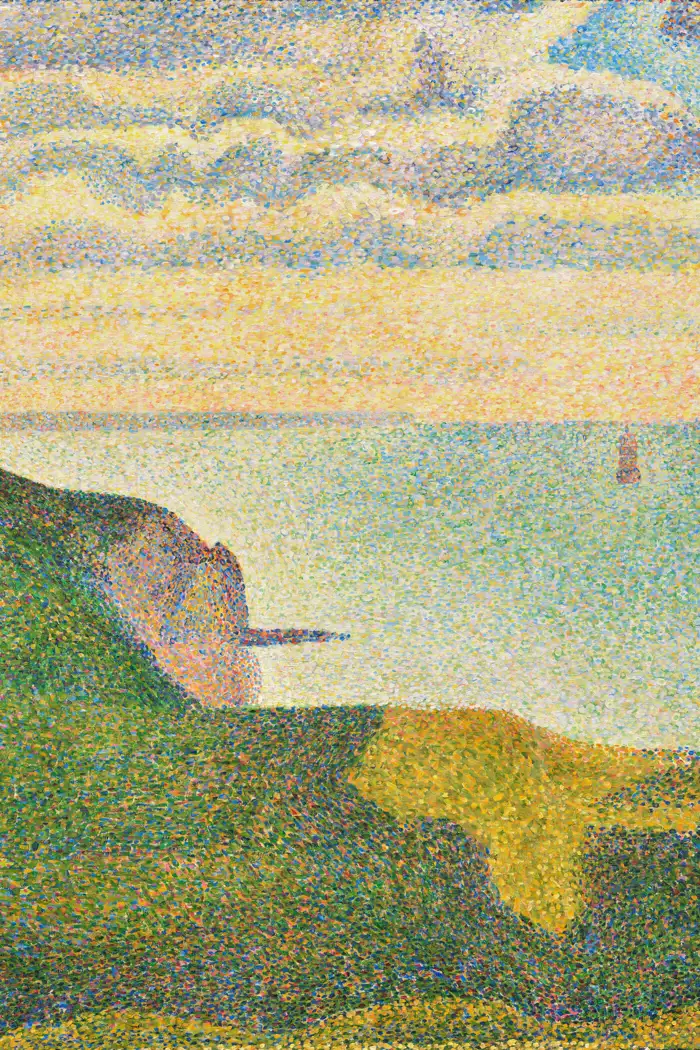
To the Lighthouse
What is To the Lighthouse about?
Set on an island off the Scottish coast, To the Lighthouse minutely examines the fleeting impressions of a large cast of family, friends, lovers, and hangers-on. Who can we be, Virginia Woolf invites us to ask, if no one can ever know our hearts—if they’re unknowable even to ourselves? To the Lighthouse remains one of the most important Modernist novels, exquisitely composed by one of the most gifted writers of the Modernist movement. The opening section follows the passage of a day with a thwarted objective: to go to the nearby lighthouse. The concluding section revisits this expedition a decade later, when so much is irrevocably changed, as a chance to glimpse interpersonal understandings and connections. The novel provides a brilliant example of stream-of-consciousness writing, and raises questions that provoke us still: questions about whether children are the fullest realization of one’s posterity, how women artists are regarded socially, and how money and status enable—or close off—networks, relationships, and the dreams we hold most dear. As masterful as its technique is, however, the lasting value of this novel for twenty-first-century readers may be its sharp representation of the emotional labor that people—particularly women—perform in order to manage the needs and expectations of others. Woolf wrote in an age when women’s participation in society was tightly restricted by class norms and stultifying domesticity. Nearly a century later, scholars still have a great deal to say about Mrs. Ramsay, Lily Briscoe, and the tension between Mr. Ramsay and his son James. Woolf’s fifth novel, and one of her most successful books both critically and commercially, To the Lighthouse was originally published in 1927, simultaneously in England and the United States. Due to a quirk in the management and correction of the proofs, according to scholar Hans Walter Gabler, the two editions were “not identical, since in a significant number of instances Virginia Woolf marked up the first proofs differently” for her two publishers. The Standard Ebooks edition is based primarily on the Hogarth UK edition.
Main themes in To the Lighthouse
Time and loss
Time and loss emerges as a defining element in To the Lighthouse, shaping character development.
Memory and perception
In To the Lighthouse, memory and perception provides a lens for understanding the story's core message.
Art and creation
Art and creation emerges as a defining element in To the Lighthouse, shaping character development.
Family dynamics
The theme of family dynamics weaves through To the Lighthouse, adding depth to its narrative.
Why To the Lighthouse is still relevant today
To the Lighthouse (1927) is often considered Woolf's most perfectly achieved novel. Structured in three parts spanning a decade, it explores the Ramsay family's relationships, the nature of art and perception, and the passage of time. The central image of the lighthouse—promised, deferred, finally reached—becomes a profound meditation on desire, loss, and the persistence of memory against time's erosion.
More by this author
Frequently Asked Questions
What is To the Lighthouse about?
The novel follows the Ramsay family at their summer house. Young James wants to visit the lighthouse; his father refuses. Years pass, marked by death and war. Finally, the trip is made—transformed by all that has changed.
What does the lighthouse symbolize?
The lighthouse represents desire, aspiration, and the distance between wanting and having. Its meaning shifts for different characters and through time, becoming a meditation on how goals and their achievement differ.
What is the Time Passes section?
The middle section covers ten years in about thirty pages, with the house empty and time passing. Deaths, including Mrs. Ramsay's, occur parenthetically. It's one of literature's most striking treatments of time's passage.
Is this autobiographical?
Woolf drew on memories of her parents and childhood summers in Cornwall. Mr. and Mrs. Ramsay reflect aspects of her father Leslie Stephen and mother Julia, making the novel partly an elegy.