A Pair of Blue Eyes
What is A Pair of Blue Eyes about?
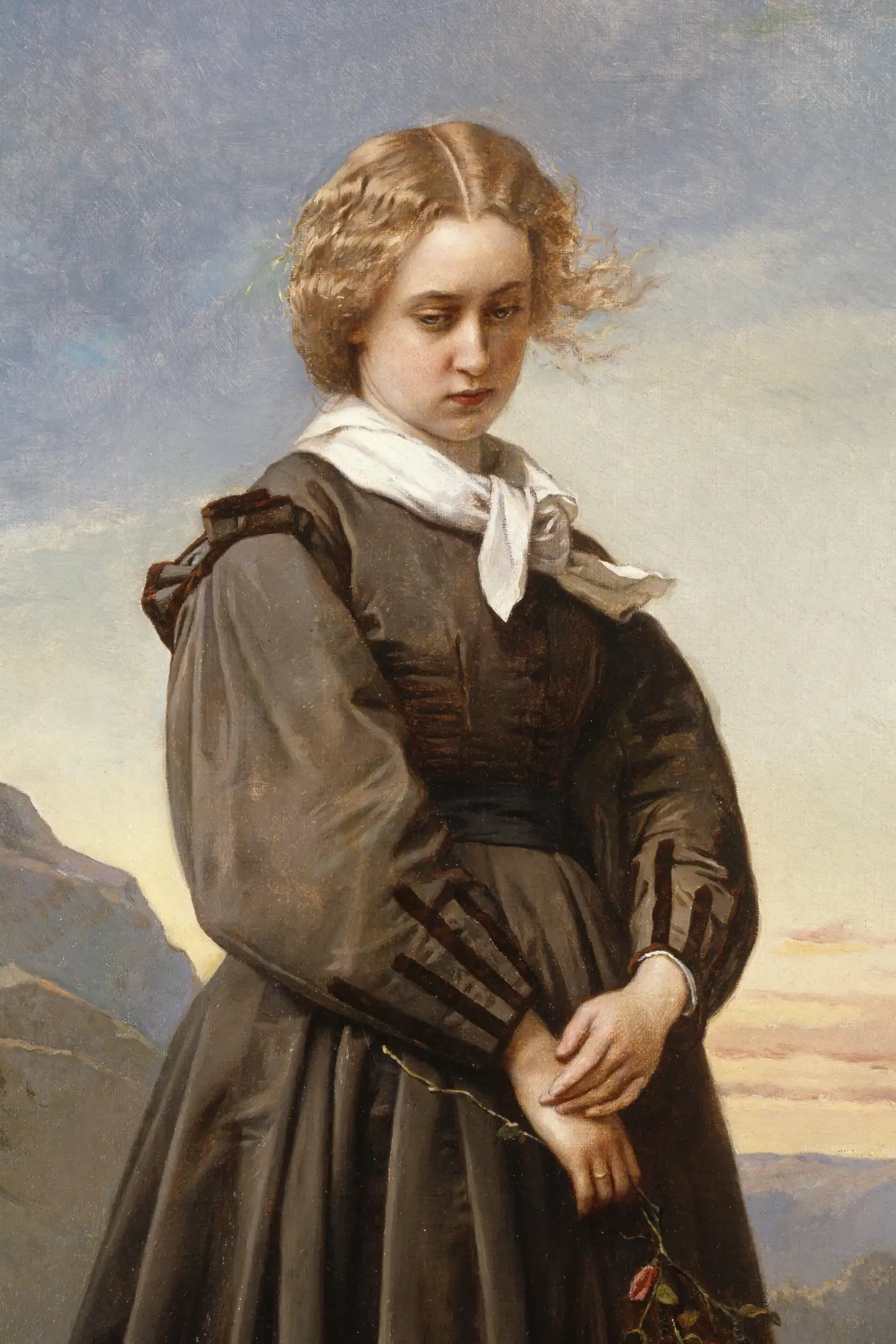
Young Elfride falls in love for the first time with an architect who is sent to make plans to renovate the local church. She supposes Stephen to be a professional man from London, but finds he comes from more humble origins. Stephen must go away and make something of himself before he can claim her. Circumstances change in his absence, and Elfride must decide if she will keep her pledge to marry Stephen. A Pair of Blue Eyes is Thomas Hardy’s third novel, and the first one to bear his real name when it was first published. The novel was first published as a serial, and the “cliffhanger” is supposed to have been named after a scene in which a character is left hanging over the edge of a cliff—while readers are left waiting for the next chapter to be serialized.
Main themes in A Pair of Blue Eyes
Romantic rivalry
A Pair of Blue Eyes thoughtfully explores romantic rivalry through its central conflicts.
Cornish coast
Cornish coast emerges as a defining element in A Pair of Blue Eyes, shaping character development.
Class differences
The presence of class differences in A Pair of Blue Eyes connects readers to its enduring relevance.
Jealousy and discovery
The presence of jealousy and discovery in A Pair of Blue Eyes connects readers to its enduring relevance.
Why A Pair of Blue Eyes is still relevant today
A Pair of Blue Eyes (1873) is Hardy's third novel, partly autobiographical and featuring a famous cliff-hanging scene that may have originated the term. Set on the Cornish coast, it tells of Elfride Swancourt caught between two suitors whose discovery of each other has tragic results. The novel shows Hardy developing his distinctive themes and settings.
More by this author
Frequently Asked Questions
What is A Pair of Blue Eyes about?
Young Elfride Swancourt attracts two suitors—Stephen Smith, a working-class architect, and Henry Knight, his sophisticated mentor. When the men discover their rivalry, the consequences are tragic.
Is this novel autobiographical?
Partly. Hardy drew on his own courtship of Emma Gifford in Cornwall for the setting and some situations. The architectural work and class tensions also reflect his own experiences.
What is the famous cliff scene?
Henry Knight hangs from a cliff face, eye-to-eye with a fossil trilobite, while Elfride makes a rope from her undergarments to save him. This suspenseful scene may have originated the term 'cliffhanger.'
How does this compare to Hardy's later work?
It is apprentice work compared to his masterpieces but shows him developing characteristic themes: class barriers, romantic triangles, and the Wessex landscape. The cliff scene displays his gift for dramatic situations.