An Antarctic Mystery
What is An Antarctic Mystery about?
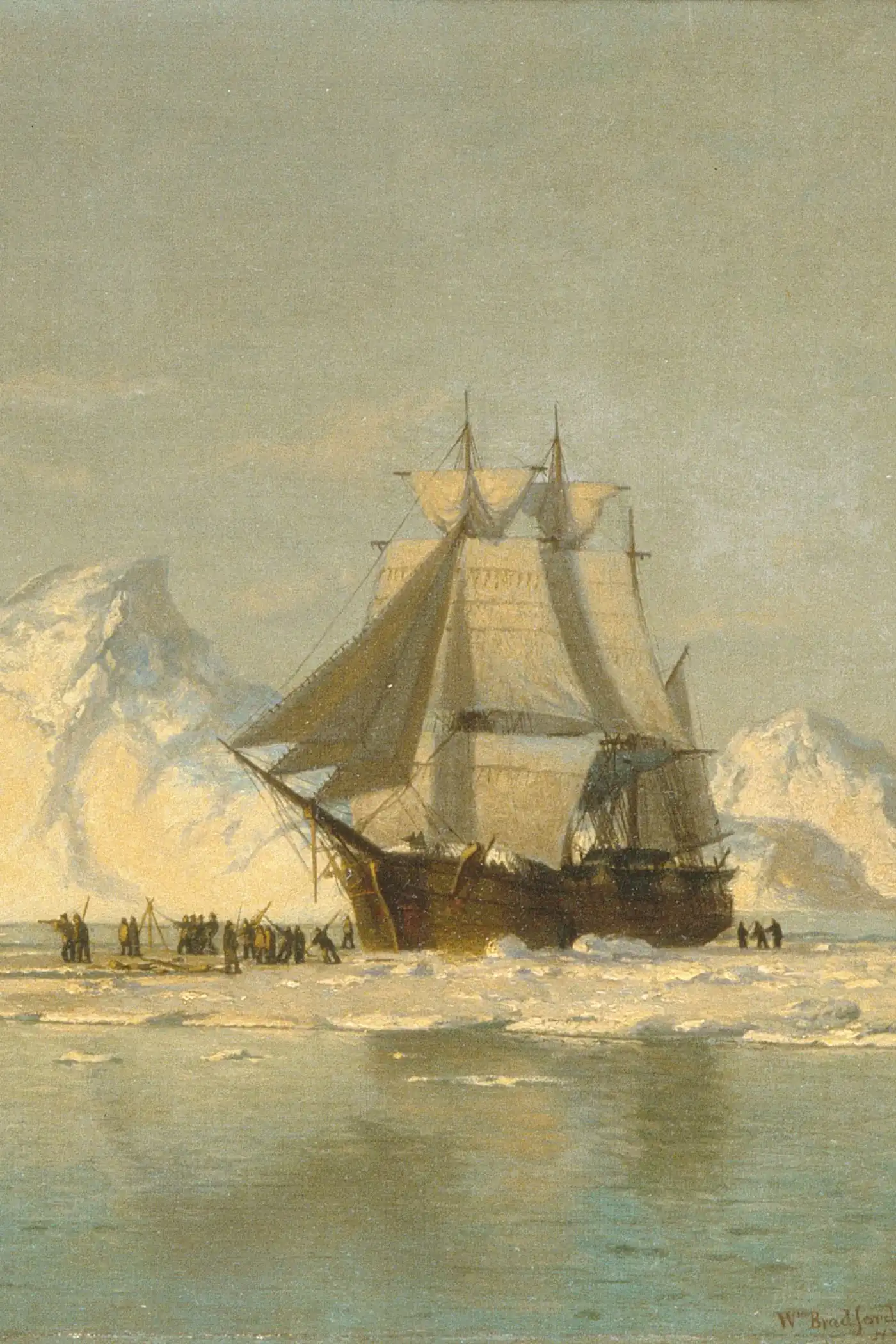
An Antarctic Mystery follows Mr. Jeorling, a wealthy American naturalist whose research has led him to the remote Kerguelen Islands, located in the southern Indian Ocean. Jeorling begins his adventure on the Halbrane after being admitted aboard by the reluctant captain Len Guy, who believes the events in The Narrative of Arthur Gordon Pym to be true. In that novel, Pym persuades Len Guy’s brother, William Guy, to lead a voyage to the Antarctic. But the expedition ends in failure when William Guy, his crew, and his ship, the Jane , disappear under mysterious circumstances. Captain Len Guy convinces Jeorling to aid in the search for his brother, and the two embark on an expedition south to the Antarctic in search of the previous voyage’s survivors. Despite the fact that Jules Verne’s work was published over fifty years after Pym , the events in the novel take place only one year after the disappearance of the Jane .
Main themes in An Antarctic Mystery
Antarctic exploration
An Antarctic Mystery thoughtfully explores antarctic exploration through its central conflicts.
Literary sequel
Literary sequel emerges as a defining element in An Antarctic Mystery, shaping character development.
Mystery and revelation
In An Antarctic Mystery, mystery and revelation provides a lens for understanding the story's core message.
Survival at sea
The theme of survival at sea weaves through An Antarctic Mystery, adding depth to its narrative.
Why An Antarctic Mystery is still relevant today
An Antarctic Mystery is Verne's sequel to Edgar Allan Poe's Narrative of Arthur Gordon Pym, resolving Poe's unfinished Antarctic mystery. Verne admired Poe and wrote this continuation decades later, blending his scientific approach with Poe's Gothic atmosphere. It's a unique literary tribute.
More by this author
Frequently Asked Questions
What is An Antarctic Mystery about?
Picking up where Poe's Arthur Gordon Pym ends, this novel follows a ship venturing into Antarctic waters to discover what happened to Pym. Verne provides rational explanations for Poe's mysterious events while adding his own adventure.
Do I need to read Poe's novel first?
Reading Poe's Narrative of Arthur Gordon Pym enriches the experience, as Verne explicitly continues that story. However, Verne provides enough context for new readers. Both are short and complement each other.
Why did Verne write a sequel to Poe?
Verne greatly admired Poe and was frustrated by the unfinished ending of Arthur Gordon Pym. He wrote this "answer" decades later to resolve Poe's mysteries with his characteristic scientific rationalism.
Is An Antarctic Mystery typical Verne?
It's unusual in being a sequel to another author's work and in its Gothic elements. Verne blends his scientific style with Poe's atmosphere, creating a hybrid that may appeal to fans of both writers.