The Special Correspondent
What is The Special Correspondent about?
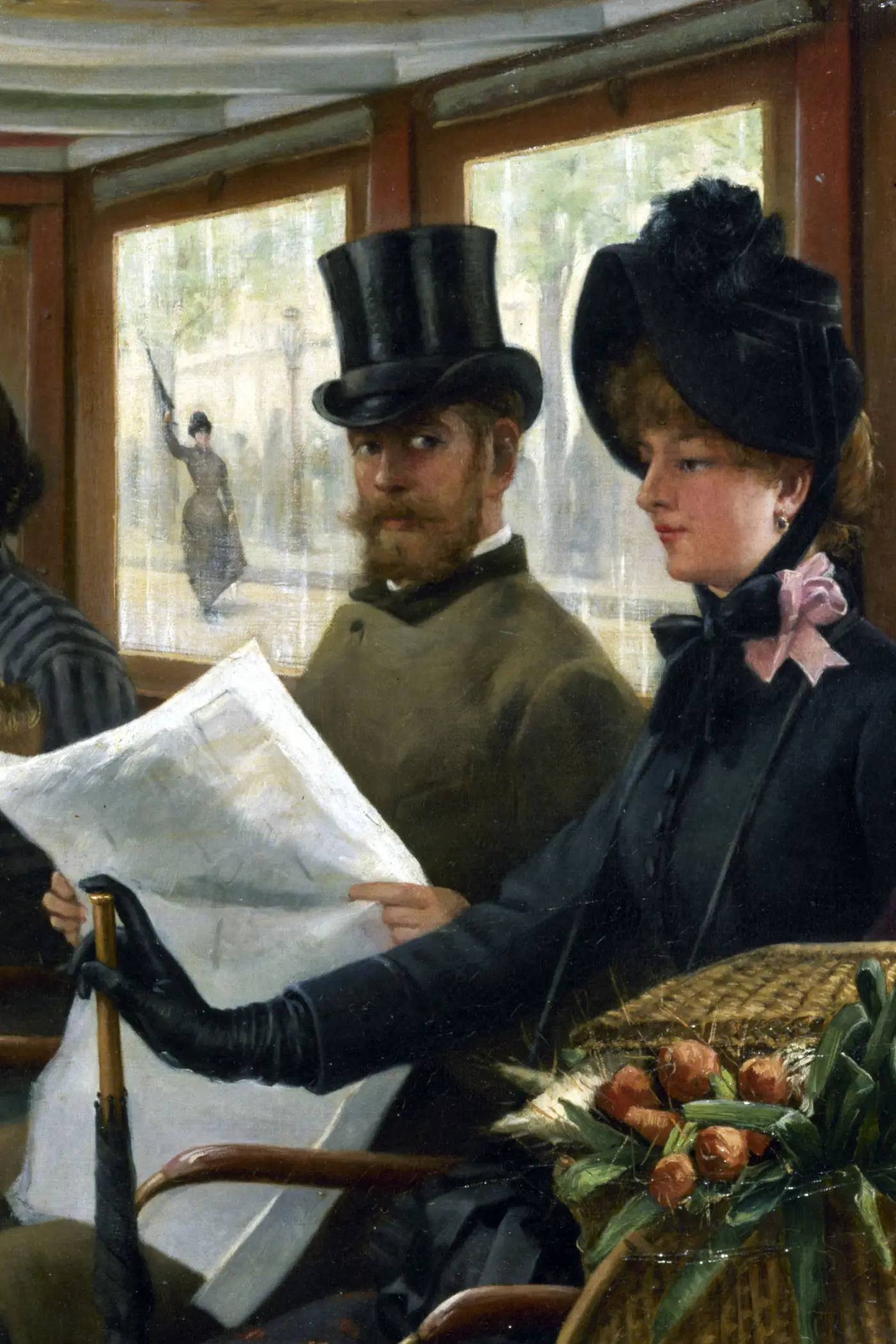
Set in the early 1890s, The Special Correspondent tells the story of Claudius Bombarnac, special correspondent from the Parisian newspaper Twentieth Century , assigned to travel the newly completed Grand Transasiatic Railway running from Uzun Ada (on the eastern coast of the Caspian Sea) to Peking (Beijing), China. Over his thirteen-day journey he meets an eclectic cast of characters, including an impatient American businessman, a detached English lady, a Russian major, a French actor and actress, a young Chinese noble accompanied by an eccentric Doctor, and a German baron racing to circle the globe in thirty-nine days—perhaps a nod to Verne’s Around the Word in Eighty Days , published twenty years earlier. As he meets them, Bombarnac assigns each a number in his notebook, and seeks to get to know them as they travel together. As a dedicated special correspondent, Bombarnac’s greatest fear is that his nearly two-week journey will pass without anything interesting happening to fill his columns. But his fears turn out to be unfounded, and he sees as much—and perhaps even more—danger and adventure than he had hoped. Between these episodes, we’re also given an interesting look at Central Asia at the cusp of the twentieth century, influenced by the expanding political scope of Russia and China, and by the forces of modernity—Bombarnac mourns the sight of electric streetlamps in ancient towns, and expresses horror when passed by two locals in Samarkand riding bicycles. The Special Correspondent was originally published in France in 1892 under the title Claudius Bombarnac . Written later in Verne’s life, it shows off his knowledge of languages, people, and customs, as well as his wry sense of humor. This English translation, originally appearing in The Boy’s Own Paper of October 1893, feels surprising fresh and modern, and takes the reader on an entertaining ride along with Verne’s indefatigable news correspondent.
Main themes in The Special Correspondent
Railway adventure
The theme of railway adventure weaves through The Special Correspondent, adding depth to its narrative.
Journalism and competition
Journalism and competition emerges as a defining element in The Special Correspondent, shaping character development.
Central Asian travel
The Special Correspondent thoughtfully explores central asian travel through its central conflicts.
Romance and rivalry
In The Special Correspondent, romance and rivalry provides a lens for understanding the story's core message.
Why The Special Correspondent is still relevant today
The Special Correspondent follows journalists on the new Transcaspian railway connecting Europe to Asia. The novel combines travelogue, journalism adventure, and romantic intrigue as reporters race for scoops. It's Verne's tribute to the expanding railway age and the profession of foreign correspondence.
More by this author

Frequently Asked Questions
What is The Special Correspondent about?
French journalist Claudius Bombarnac reports on the new Transcaspian railway's inaugural journey from the Caspian Sea to China. Professional rivalries, romantic intrigue, and adventure complicate the journey across Central Asia.
Was the Transcaspian railway real?
Yes, the railway connected Russian Central Asia to the broader rail network. Verne researched the route carefully, combining accurate geography with fictional adventure. The novel celebrates this technological achievement.
Is this similar to Around the World in Eighty Days?
Both feature transportation adventures and journalistic elements. The Special Correspondent focuses more on the journalism profession and railway technology. It's less famous but similarly entertaining.
Is The Special Correspondent worth reading today?
It offers insight into late 19th-century journalism and Central Asian perceptions. The adventure is lighter than major Verne works. Readers interested in railway history or journalism will find it enjoyable.