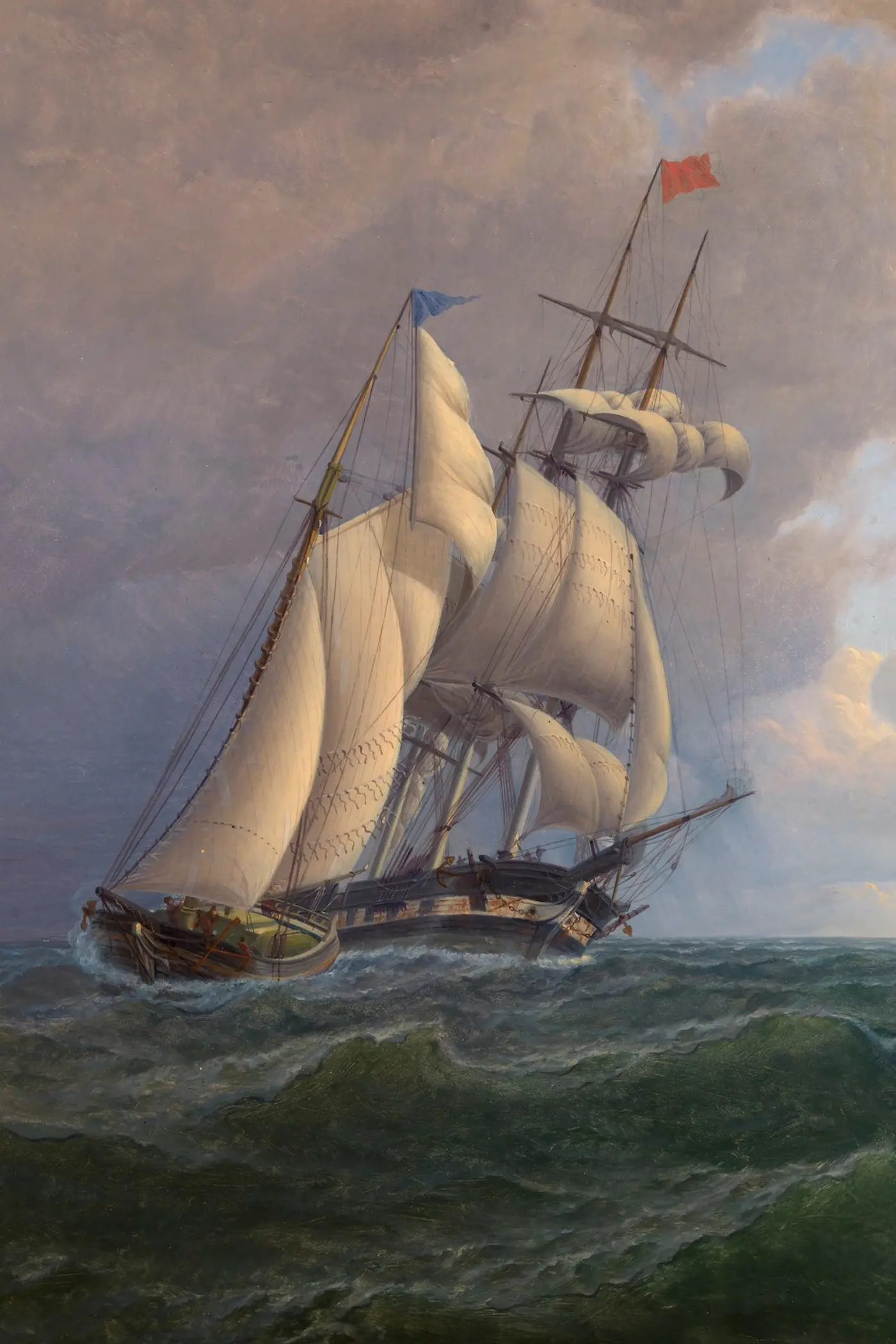
Dick Sands, the Boy Captain
What is Dick Sands, the Boy Captain about?
After an accident on board a whaling ship the captain is lost at sea, making the fifteen-year-old apprentice Dick Sands the acting captain. Through traitorous scheming by the ship’s cook, and bad weather, the ship is blown from the South Pacific around Cape Horn and onto the west coast of Africa. Dick continues to lead the survivors through various trials among the slave traders of Angola. As in many of his other books, Verne touches on scientific topics like entomology, flora, and fauna. He also recounts the adventures of the notable white explorers of Africa. Dick Sands can be read both as an adventure story, and as a condemnation of the horrible cruelties of slavery. When it was written, many countries had already banned the slave trade, but it was still active in Africa. Only when colonial explorers and missionaries started to penetrate the continent did the practice really come under pressure.
Main themes in Dick Sands, the Boy Captain
Anti-slavery message
In Dick Sands, the Boy Captain, anti-slavery message provides a lens for understanding the story's core message.
Coming of age
In Dick Sands, the Boy Captain, coming of age provides a lens for understanding the story's core message.
African exploration
Dick Sands, the Boy Captain thoughtfully explores african exploration through its central conflicts.
Betrayal and survival
In Dick Sands, the Boy Captain, betrayal and survival provides a lens for understanding the story's core message.
Why Dick Sands, the Boy Captain is still relevant today
Dick Sands, the Boy Captain is Verne's anti-slavery novel, depicting the horrors of the African slave trade. When treachery strands a ship's party in Angola, the young hero must navigate slavery, betrayal, and wilderness survival. It's Verne's most directly political novel, condemning slavery unequivocally.
More by this author

Frequently Asked Questions
What is Dick Sands, the Boy Captain about?
Fifteen-year-old Dick Sands becomes captain when the Pilgrim's officers die. A treacherous cook, secretly a slave trader, deceives them into landing in Africa. Dick must save his companions from slavery while leading them to safety.
Is Dick Sands an anti-slavery novel?
Explicitly so—Verne condemns the slave trade in graphic terms, depicting its cruelty through the characters' experiences. Written after American emancipation but while African slavery continued, it's clearly political.
Is this suitable for young readers?
The young hero and adventure plot suggest young adult readers, but the slavery content is disturbing by design. Parents should consider whether children are ready for honest depiction of historical atrocities.
How does Dick Sands compare to other Verne novels?
It's more politically engaged than most Verne, with the anti-slavery message central rather than incidental. The African setting provides typical geographical adventure, but the moral purpose distinguishes it.