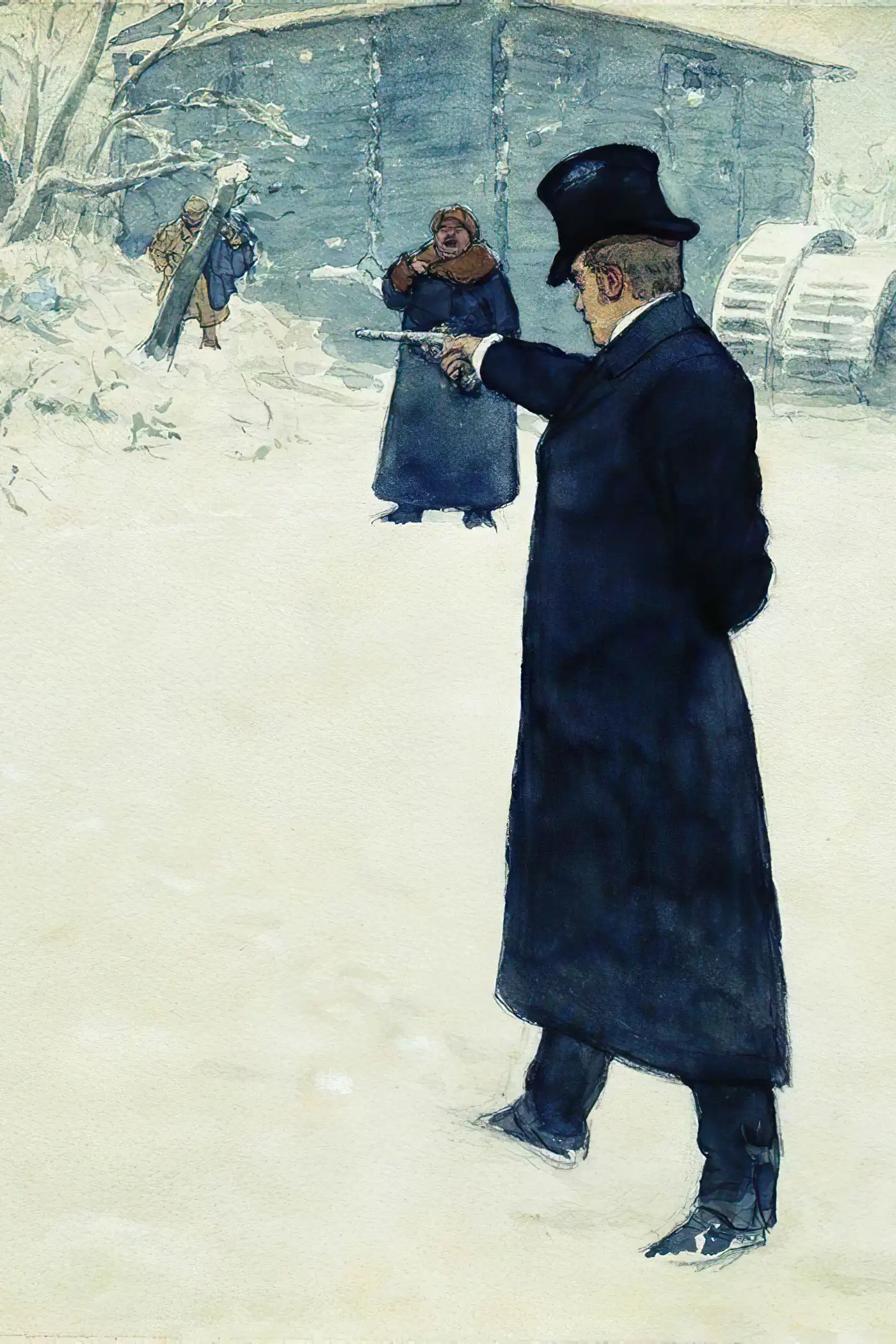
The Duel
What is The Duel about?
The Duel is one of Chekhov’s longest works, skirting the edge between novel and novella. Like many of Chekhov’s works, it was first published as a serial. Laevsky is a womanizing drunkard, a slave to life’s vices. His wantonness clashes with the moralistic zoologist Von Koren, who grows to despise Laevsky. Their mutual enmity culminates in a duel—though neither they, nor their friends, really want it to happen.
Main themes in The Duel
Moral transformation
Moral transformation emerges as a defining element in The Duel, shaping character development.
Science versus humanity
Science versus humanity emerges as a defining element in The Duel, shaping character development.
The duel tradition
The Duel thoughtfully explores the duel tradition through its central conflicts.
Black Sea setting
The Duel thoughtfully explores black sea setting through its central conflicts.
Why The Duel is still relevant today
The Duel (1891) is one of Chekhov's longest and most ambitious stories, practically a short novel. Two men—the dissolute Laevsky and the rigid scientist Von Koren—clash in a Black Sea resort town, with a duel resolving their conflict. The story explores how people can change, whether they can redeem wasted lives, and the gap between scientific theory and human complexity.
More by this author
Frequently Asked Questions
What is The Duel about?
Laevsky, a weak intellectual in a Black Sea town, has ruined his life and his mistress's through irresolution. Von Koren, a rigid scientist, despises him and eventually challenges him to a duel. The near-death experience transforms both men.
Can people really change in Chekhov?
The Duel is unusual in suggesting they can. The duel shocks Laevsky into reformation. Chekhov shows change is possible but doesn't guarantee it—the ending remains open about whether transformation will last.
What is Von Koren's philosophy?
Von Koren believes in Social Darwinism—that weak, useless people like Laevsky should be eliminated for society's good. The story tests and ultimately refutes this cold scientific view against human complexity.
Is this a novella or a short story?
At roughly 100 pages, it's Chekhov's longest fiction—sometimes called a novella, sometimes a long story. Its scope and complexity make it an important counterpart to his more typical brief stories.