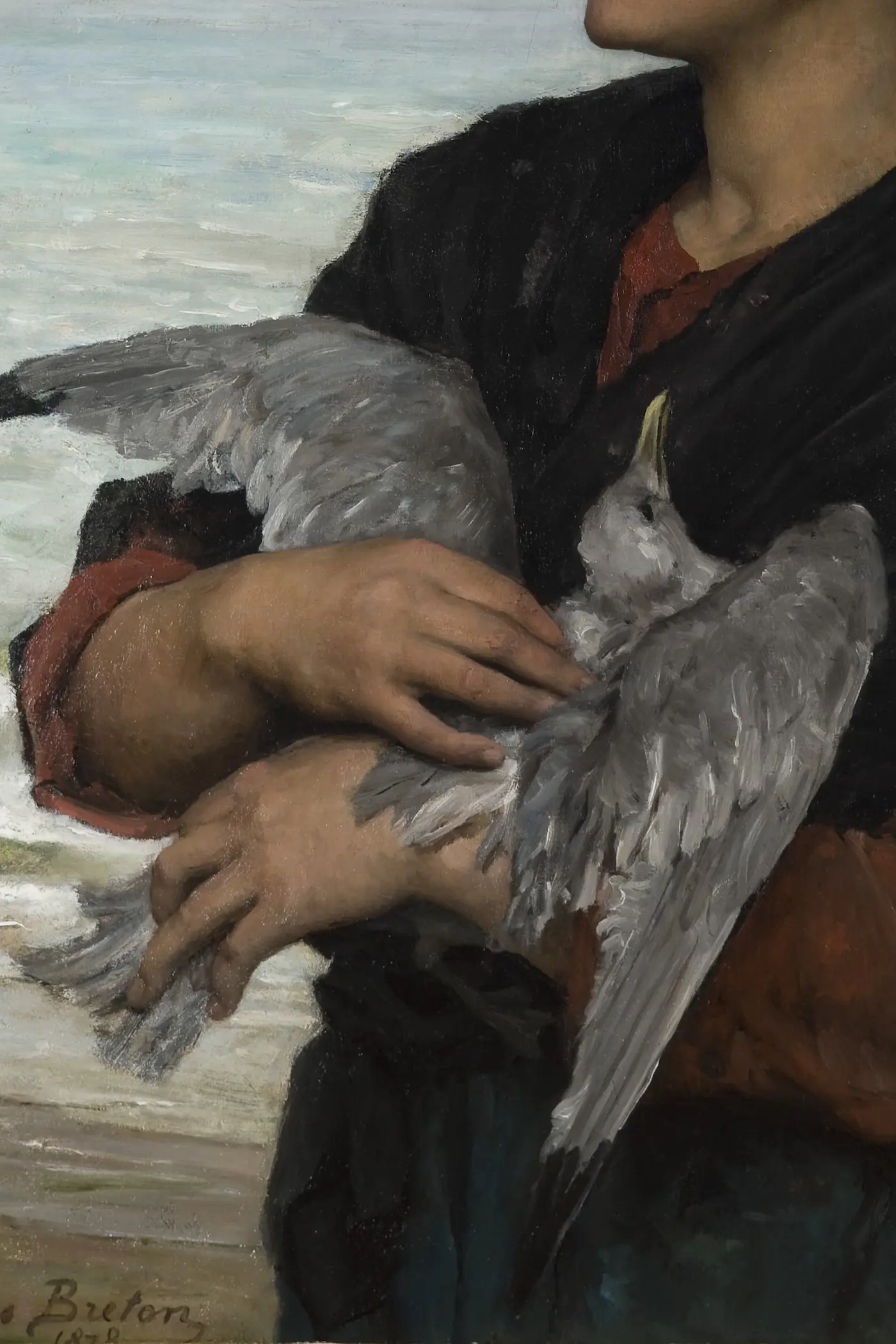
The Seagull
What is The Seagull about?
A fading actress, Madame Irina Nikolayevna Arkadin, visits her brother’s country estate, where her son, Konstantin Gavrilovitch Treplev, stages an avant-garde play in an attempt to realize his artistic ambitions. The play stars the woman he’s in love with, Nina Mihailovna Zaretchny, an aspiring actress with restrictive parents. Meanwhile, Masha, the daughter of the estate manager, pines for Treplev, while a local schoolteacher, Medvedenko, pines for Masha. Trigorin, a novelist, accompanies Madame Arkadin, but then attracts Nina’s attention. Some characters desire love, some desire artistic success, and some desire both—but over the course of the play, they’ll discover that happiness can be difficult to find. The Seagull , published in 1895, is considered to be the first of Chekhov’s four major plays. In contrast to most mainstream 19th-century plays, which were melodramatic, most of the characters speak in subtext. The play’s opening night in 1896 was famously a failure, and made Chekhov want to abandon writing plays. But when it was produced two years later by Konstantin Stanislavski, the seminal Russian theater practitioner, the play became a huge success. While some productions interpret the play as a tragedy, Chekhov always considered it to be a comedy.
Main themes in The Seagull
Art and ambition
The theme of art and ambition weaves through The Seagull, adding depth to its narrative.
Unrequited love
The theme of unrequited love weaves through The Seagull, adding depth to its narrative.
Generations in conflict
The Seagull thoughtfully explores generations in conflict through its central conflicts.
The seagull symbol
In The Seagull, the seagull symbol provides a lens for understanding the story's core message.
Why The Seagull is still relevant today
The Seagull (1896) is Chekhov's first major play, exploring art, love, and frustrated ambition among artists and would-be artists at a country estate. Its disastrous premiere nearly ended Chekhov's theatrical career, but Stanislavski's Moscow Art Theatre production two years later launched modern theater. The play's symbol of the killed seagull and its complex web of unrequited loves established Chekhov's revolutionary approach.
More by this author

Frequently Asked Questions
What is The Seagull about?
At a country estate, aspiring writer Konstantin stages a play for his actress mother. Multiple unrequited loves interweave: Konstantin loves Nina, Nina loves the successful writer Trigorin, Masha loves Konstantin. A killed seagull becomes a symbol of destroyed innocence.
What does the seagull represent?
Nina compares herself to a seagull—a free creature destroyed by a man's idle cruelty. Trigorin uses the image for a story. The symbol carries multiple meanings about art, innocence, and destruction.
Why was the premiere a disaster?
The 1896 premiere was presented as comedy and performed in conventional style. The audience, expecting farce, found it baffling. Chekhov was devastated and nearly abandoned playwriting.
How did The Seagull become famous?
Stanislavski's 1898 production at the Moscow Art Theatre understood Chekhov's revolutionary methods. Its triumph established both Chekhov as a dramatist and the Art Theatre as an institution. The seagull became the theater's emblem.