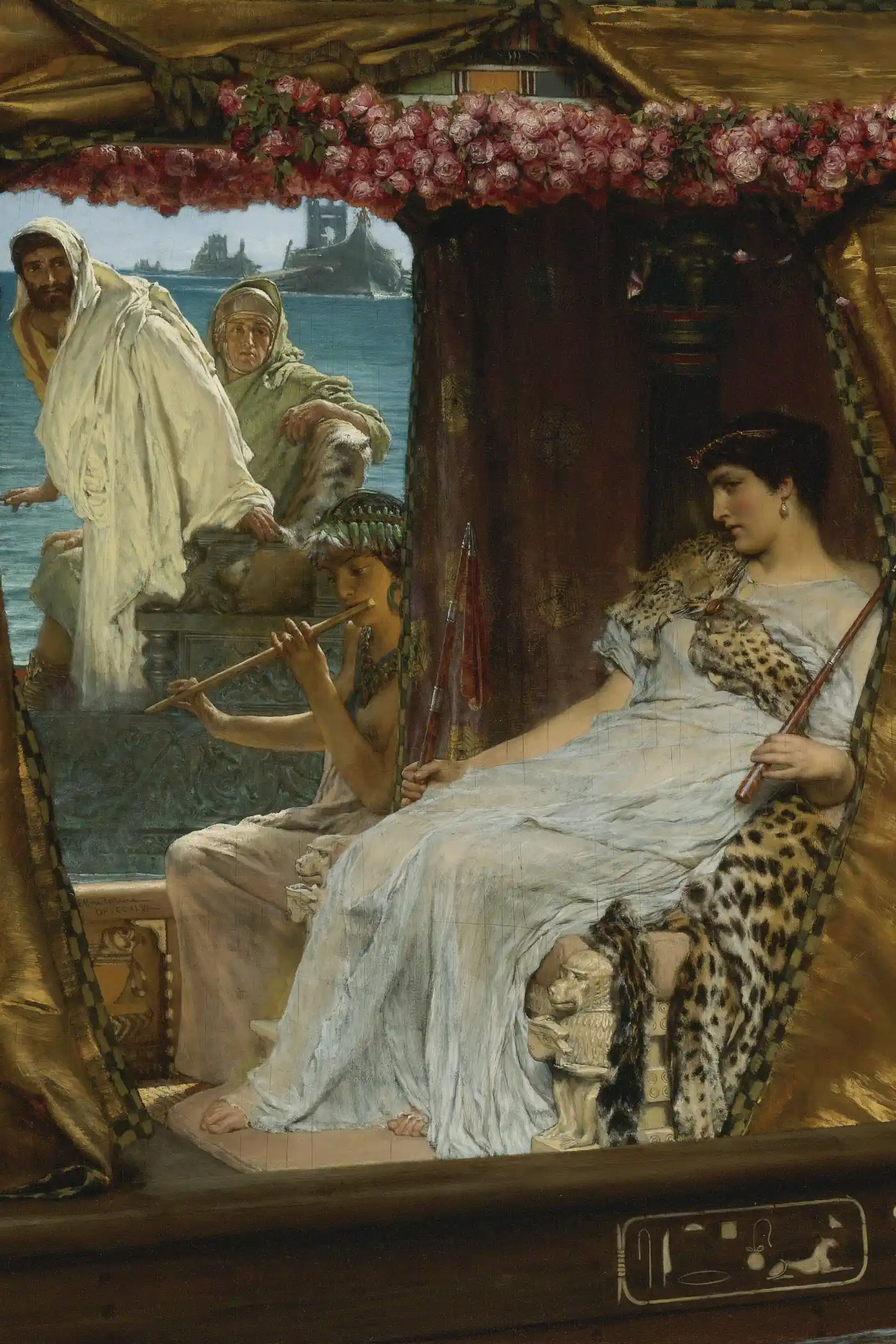
Antony and Cleopatra
What is Antony and Cleopatra about?
Antony and Cleopatra begins two years after Julius Caesar . Mark Antony was supposed to be in Egypt to conduct government affairs on behalf of the Roman Empire. Instead, he fell in love with the beautiful Queen Cleopatra, became her lover, and abandoned his duties to his wife and country. A messenger arrives bearing news that Antony’s wife and brother are dead after attempting to kill Octavius Caesar, and one of Caesar’s generals, Pompey, is gathering an army against the Roman leaders. Mark Antony has no choice but to return to Rome. When Antony returns to the capital, he argues with Caesar over his loyalty to the empire and the other triumvirs. The only way that Antony can prove his fidelity to Caesar is to marry his sister, Octavia. The news of this marriage makes its way back to Egypt and its queen. The play was published in 1606 after the great success of Macbeth . This Standard Ebooks edition is based on William George Clark and William Aldis Wright’s 1887 Victoria edition, which is taken from the Globe edition.
Main themes in Antony and Cleopatra
Love and duty
Antony and Cleopatra thoughtfully explores love and duty through its central conflicts.
Empire and power
The theme of empire and power weaves through Antony and Cleopatra, adding depth to its narrative.
East and West
The presence of east and west in Antony and Cleopatra connects readers to its enduring relevance.
Age and passion
In Antony and Cleopatra, age and passion provides a lens for understanding the story's core message.
Why Antony and Cleopatra is still relevant today
Antony and Cleopatra is Shakespeare's most expansive tragedy, spanning the Roman world from Alexandria to Rome. Its portrayal of Cleopatra—intelligent, theatrical, and infinitely alluring—has influenced depictions of powerful women and romantic obsession. The play's grand poetry and examination of how private passion destroys public duty continues to fascinate audiences and inspire adaptations.
More by this author
Frequently Asked Questions
What is Antony and Cleopatra about?
Mark Antony, one of Rome's rulers, is enthralled by Egyptian queen Cleopatra. His neglect of Roman duties leads to war with Octavian. After military defeat and miscommunication, both lovers commit suicide rather than face capture and humiliation.
Is Antony and Cleopatra a love story?
The play presents love that is both magnificent and destructive. Antony and Cleopatra's passion transcends political reality, leading to their ruin but also their legendary status. Whether their love is noble or foolish is left for audiences to judge.
How does Cleopatra die?
Cleopatra lets an asp (poisonous snake) bite her rather than be paraded in Octavian's Roman triumph. Her death scene emphasizes her dignity and queenliness: "I am fire and air; my other elements / I give to baser life."
Is Antony and Cleopatra historically accurate?
Shakespeare followed Plutarch closely. The historical events—Antony's infatuation, the war with Octavian, both suicides—occurred as depicted, though dialogue and some details are Shakespeare's invention.