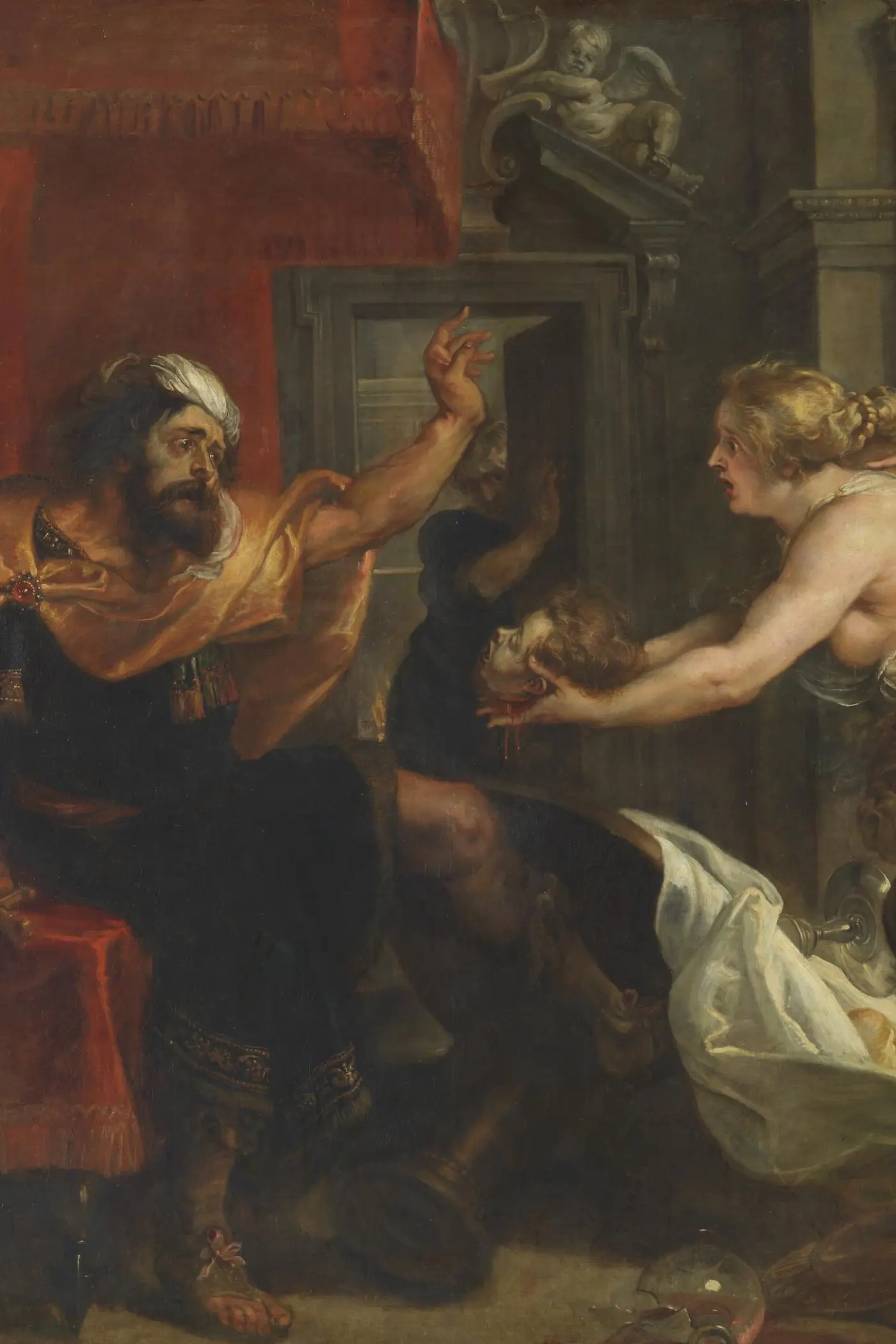
Titus Andronicus
What is Titus Andronicus about?
Titus Andronicus, a famous Roman general, has just returned to Rome after a war against the Goths. He brings with him five prisoners: Tamora, the Queen of the Goths, her three sons, and her lover Aaron the Moor. After losing two of his sons to the Goths, Titus kills Tamora’s eldest son as retribution, triggering a blood feud between the two families. Saturninus is elected as the new Emperor of Rome with the support of Titus Andronicus. He declares he will marry Titus’s daughter Lavinia. Titus agrees, but she has already been promised to Bassianus, Saturninus’s brother. A violent argument breaks out, resulting in Titus killing one of his sons and Tamora becoming the new empress. This Standard Ebooks edition is based on William George Clark and William Aldis Wright’s 1887 Victoria edition, which is taken from the Globe edition.
Main themes in Titus Andronicus
Revenge and violence
The theme of revenge and violence weaves through Titus Andronicus, adding depth to its narrative.
Honor and justice
Titus Andronicus thoughtfully explores honor and justice through its central conflicts.
Suffering and trauma
Titus Andronicus thoughtfully explores suffering and trauma through its central conflicts.
Rome and barbarism
Rome and barbarism emerges as a defining element in Titus Andronicus, shaping character development.
Why Titus Andronicus is still relevant today
Titus Andronicus is Shakespeare's bloodiest play, a revenge tragedy featuring rape, mutilation, murder, and cannibalism. Long dismissed as crude early work, modern productions reveal its powerful examination of violence, trauma, and cycles of revenge. Its influence on later revenge tragedies and its resonance with contemporary discussions of violence have restored its theatrical reputation.
More by this author
Frequently Asked Questions
What is Titus Andronicus about?
Roman general Titus returns from war and inadvertently begins a cycle of revenge with the captured Goth queen Tamora. Her sons rape and mutilate Titus's daughter Lavinia; Titus responds with escalating vengeance culminating in a horrific feast.
Is Titus Andronicus too violent?
The play contains extreme violence including rape, multiple murders, and cannibalism. Whether this is gratuitous or purposeful is debated. Modern productions often use the violence to explore trauma, cycles of revenge, and the corruption of civilization.
Did Shakespeare really write Titus Andronicus?
Yes, though some scholars suggest collaboration, possibly with George Peele for early scenes. The play was popular in Shakespeare's time. Its violence reflects revenge tragedy conventions and may deliberately push those conventions to extremes.
Is Titus Andronicus based on a true story?
No historical Titus Andronicus existed. Shakespeare combined Roman history, Ovid's tale of Philomela, and Seneca's revenge tragedies. The play comments on Rome as both civilization and barbarism rather than depicting actual events.