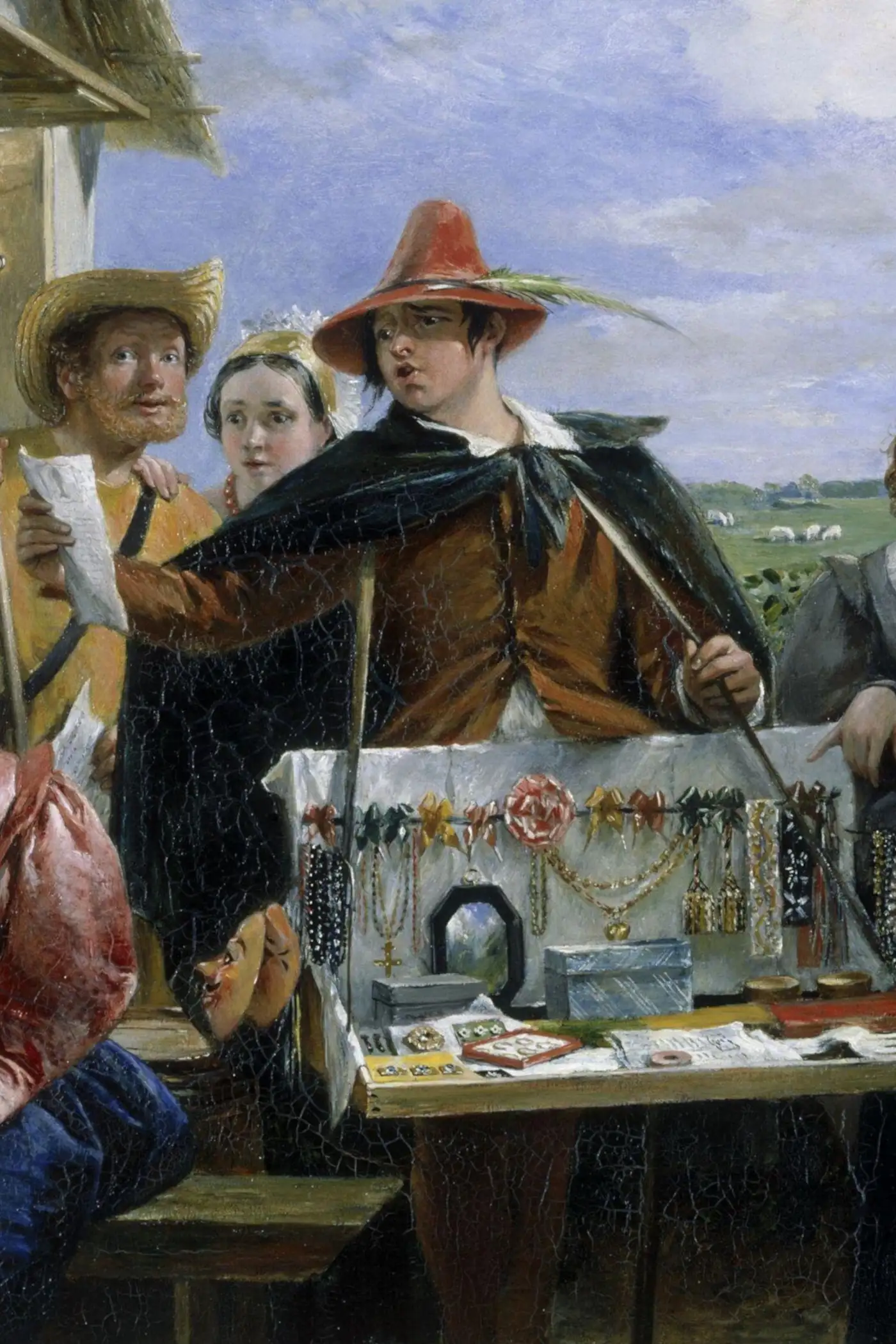
The Winter’s Tale
What is The Winter’s Tale about?
King Leontes of Sicilia accuses his wife, Queen Hermione, of infidelity with his childhood friend, King Polixenes of Bohemia. Consumed by irrational jealousy, Leontes becomes obsessed with proving Hermione’s supposed adultery and orders her imprisonment before putting her on trial, where she steadfastly maintains her innocence. Leontes’ baseless accusations lead to the destruction of his family: Hermione dies of grief, her newborn daughter is abandoned in a distant land, and her son, Mamillius, dies due to the distress caused by his father’s madness. Leontes’ abandoned daughter, Perdita, grows up as a shepherdess, unaware of her royal heritage. Sixteen years later, she returns to Sicilia. This Standard Ebooks edition is based on William George Clark and William Aldis Wright’s 1887 Victoria edition, which is taken from the Globe edition.
Main themes in The Winter’s Tale
Jealousy and destruction
In The Winter’s Tale, jealousy and destruction provides a lens for understanding the story's core message.
Time and redemption
In The Winter’s Tale, time and redemption provides a lens for understanding the story's core message.
Nature and art
The presence of nature and art in The Winter’s Tale connects readers to its enduring relevance.
Loss and restoration
Loss and restoration emerges as a defining element in The Winter’s Tale, shaping character development.
Why The Winter’s Tale is still relevant today
The Winter's Tale moves from jealous tragedy to pastoral romance to miraculous reunion, demonstrating Shakespeare's late interest in redemption and the healing power of time. The famous stage direction "Exit, pursued by a bear" marks the shift from dark first half to hopeful second. The play's themes of jealousy's destruction and forgiveness's power continue to resonate with audiences.
More by this author
Frequently Asked Questions
What is The Winter's Tale about?
King Leontes, consumed by unfounded jealousy, destroys his family: his wife Hermione apparently dies, their infant daughter is abandoned, their son dies from grief. Sixteen years later, the lost daughter Perdita is discovered, and in a miraculous finale, Hermione's statue comes to life.
What does Exit, pursued by a bear mean?
This famous stage direction describes Antigonus's death after abandoning baby Perdita in Bohemia. The bear—possibly a real trained bear in original productions—marks the play's dramatic shift from tragedy to romance, tragedy literally eaten by nature.
Is The Winter's Tale a comedy or tragedy?
The Winter's Tale is a "romance" or "tragicomedy," beginning with tragic jealousy and death, then jumping sixteen years to a pastoral comedy that ends in miraculous restoration. The genre shift is deliberate and dramatically daring.
Does Hermione come back to life?
In the final scene, Hermione's "statue" comes to life and embraces Leontes. Whether she was dead and resurrected or secretly alive for sixteen years is left ambiguous, emphasizing the miraculous nature of forgiveness and reunion.