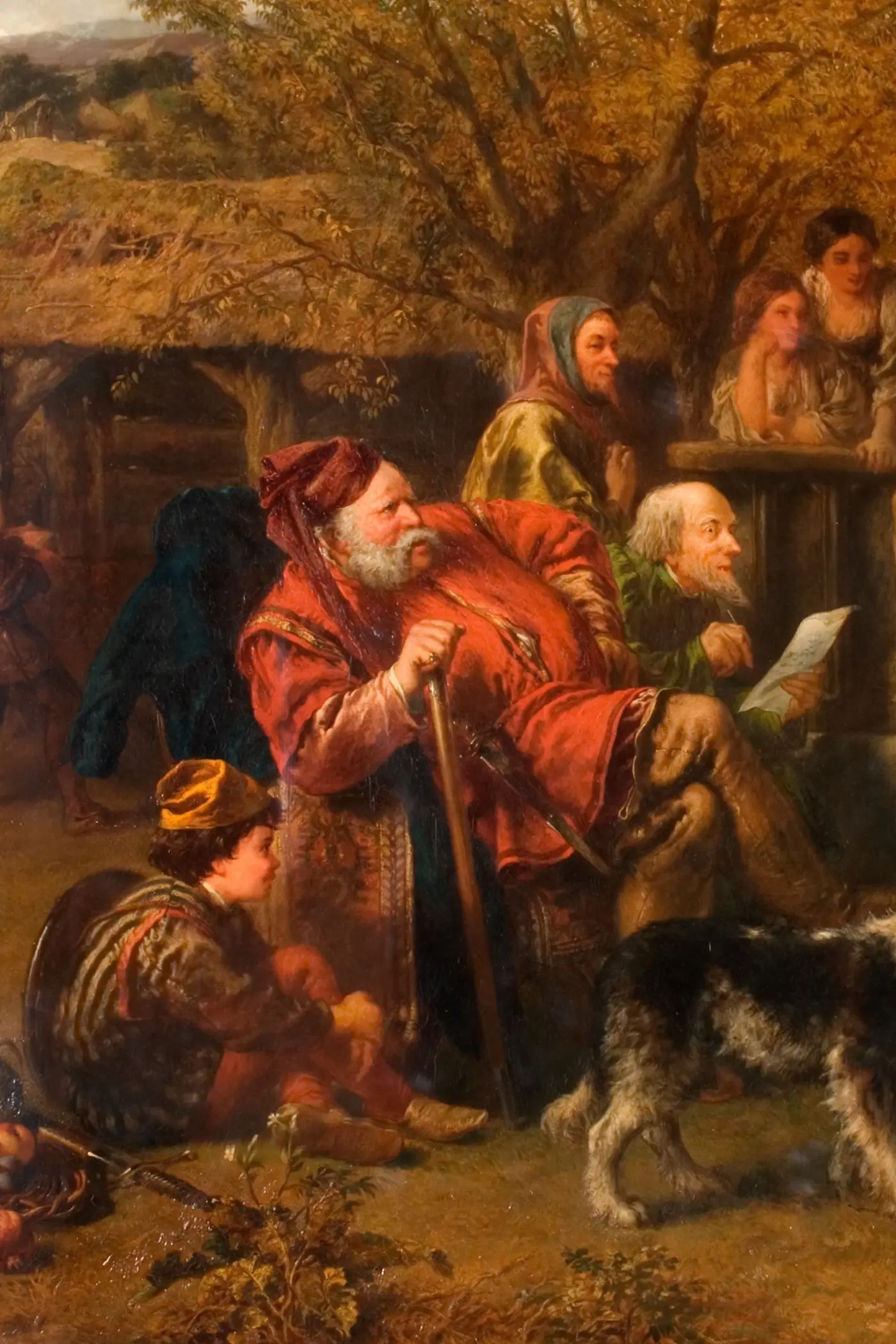
Henry IV, Part II
What is Henry IV, Part II about?
As the dust settles on the battlefield at Shrewsbury, news spreads that the rebel forces fighting against King Henry IV have suffered a terrible defeat. Their leader, Harry “Hotspur” Percy, was killed by Prince Hal. The rebel troops quickly abandon the fight after seeing their leader die. Two powerful cohorts, the Earl of Worcester and Douglas, are taken as prisoners by the King’s men. The Earl of Northumberland vows to avenge his son’s death and plans to seek support from the Archbishop of York. Meanwhile, the Archbishop has convened his group of allies—Thomas Mowbray, Lord Hastings, and Lord Bardolph—to plan the next battle against King Henry. If they want a chance of winning, they fight on three separate fronts: one to fight King Henry’s forces, one to fight the Welsh rebels led by Owen Glendower, and one to maintain the fight in France. They decide to follow this plan regardless of whether or not Northumberland lends them his army. As the Prince’s merry team of misfits return to London, Falstaff continues to create mischief wherever he goes. After hearing that his father has fallen sick, Hal starts to regret the days when he used to drink and steal with Falstaff. If he is to be the next king, he must leave behind his past along with his partners in crime. This Standard Ebooks edition is based on William George Clark and William Aldis Wright’s 1887 Victoria edition, which is taken from the Globe edition.
Main themes in Henry IV, Part II
Time and mortality
In Henry IV, Part II, time and mortality provides a lens for understanding the story's core message.
Disease and decay
Disease and decay emerges as a defining element in Henry IV, Part II, shaping character development.
Justice and judgment
The theme of justice and judgment weaves through Henry IV, Part II, adding depth to its narrative.
Loyalty and rejection
The presence of loyalty and rejection in Henry IV, Part II connects readers to its enduring relevance.
Why Henry IV, Part II is still relevant today
Henry IV, Part II continues the story of Prince Hal's maturation, culminating in his painful rejection of Falstaff upon becoming king. The play is more melancholic than Part I, dwelling on aging, illness, and the costs of power. Falstaff's journey from comic vitality to humiliated rejection provides some of Shakespeare's most poignant moments about time, mortality, and the compromises of rule.
More by this author
Frequently Asked Questions
What is Henry IV Part II about?
Part II follows the aftermath of Shrewsbury as Henry IV's health fails and new rebellions arise. Prince Hal continues his time with Falstaff while preparing for kingship. Upon his father's death, Hal becomes Henry V and publicly rejects Falstaff.
Why does Hal reject Falstaff?
As King Henry V, Hal must put aside his wild youth to rule effectively. His famous "I know thee not, old man" speech signals his transformation into a responsible monarch. Whether this is necessary wisdom or cold betrayal divides audiences.
What happens to Falstaff after the rejection?
Falstaff is banished from Henry V's presence and imprisoned briefly. In Henry V, we learn he dies offstage, broken-hearted. His death is reported by his hostess: "The king has killed his heart."
Can I read Henry IV Part II without Part I?
Part II continues directly from Part I, so reading Part I first helps understand the relationships and political situation. However, Part II can be appreciated independently as a meditation on aging and the demands of power.