Henry V
What is Henry V about?
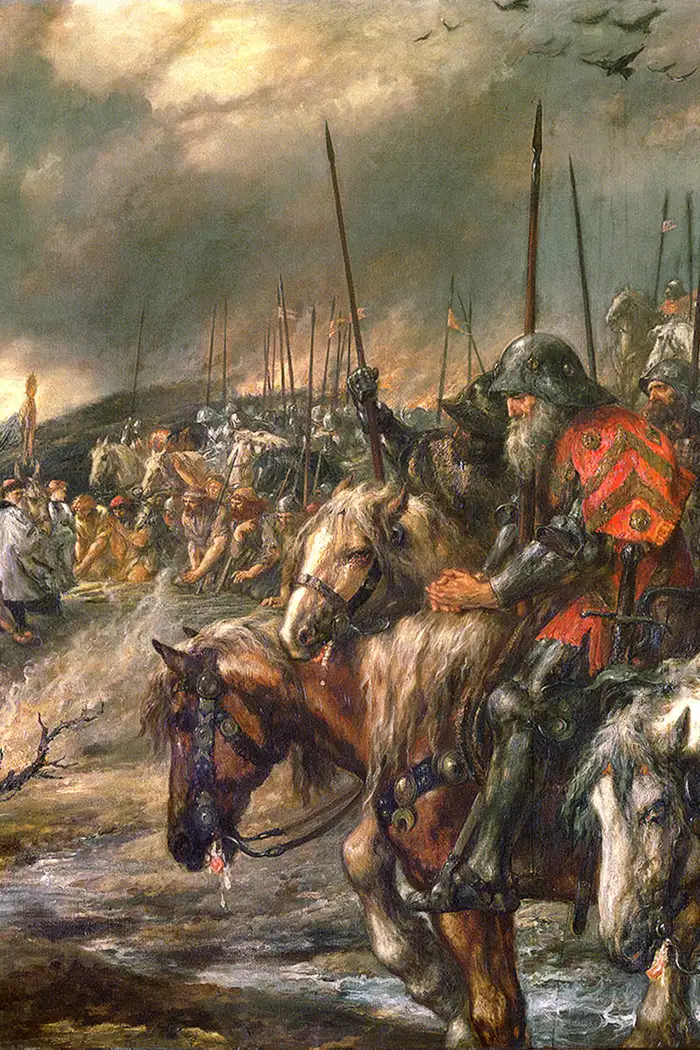
Written by William Shakespeare around 1599, The Life of Henry the Fifth , more commonly known as Henry V , chronicles the later history of King Henry the Fifth of England and his efforts during Hundred Years’ War to reclaim disputed territories in France. The play starts with Henry’s claims to be the rightful heir to the French throne and, after his invasion of France, culminates with his famous and improbable victory at the Battle of Agincourt and the negotiation of the Treaty of Troyes. Henry V is believed to have been first performed in 1599 and first appears in a “bad” quarto in 1600, so-called because it contains a shortened version, likely unauthorized and potentially just based on a performance. This quarto was republished again in 1602 by a different printer and again in 1619. The first definitive text is the version published in the 1623 First Folio . The play is the last part of a series of four history plays written by Shakespeare, including Richard II , Henry IV, Part 1 , and Henry IV, Part 2 and many of characters like Henry (who appears as a wild young Hal in the Henry IV s), Pistol, Bardolph, and Mistress Quickly would have therefore been familiar to the audience. It contains some of Shakespeare’s most memorable lines and is often held up as a powerful portrayal of inspirational leadership. This Standard Ebooks edition is based on William George Clark and William Aldis Wright’s 1887 Victoria edition, which is taken from the Globe edition.
Main themes in Henry V
War and leadership
In Henry V, war and leadership provides a lens for understanding the story's core message.
Patriotism and nationalism
Henry V thoughtfully explores patriotism and nationalism through its central conflicts.
Justice and conquest
Justice and conquest emerges as a defining element in Henry V, shaping character development.
Language and rhetoric
The theme of language and rhetoric weaves through Henry V, adding depth to its narrative.
Why Henry V is still relevant today
Henry V is Shakespeare's most stirring patriotic drama, its "St. Crispin's Day" speech among the most famous exhortations in literature. Yet the play also questions the costs of war and royal power. Laurence Olivier's 1944 film boosted British morale during WWII, while Kenneth Branagh's 1989 version emphasized war's brutality. The play continues to be staged during times of conflict and national reflection.
More by this author
Frequently Asked Questions
What is Henry V about?
Henry V follows the young English king's campaign to conquer France, including his famous victory at Agincourt against overwhelming odds. The play dramatizes Henry's transformation from wild prince to ideal warrior-king, ending with his wooing of the French princess.
What is the St. Crispin's Day speech?
Before Agincourt, Henry rallies his outnumbered troops by promising that survivors will remember this day proudly forever: "We few, we happy few, we band of brothers." It's Shakespeare's most famous speech about courage and military brotherhood.
Is Henry V a hero or villain?
Henry V can be read as ideal Christian king or ruthless conqueror. He inspires his men but also threatens French civilians and orders prisoners killed. Shakespeare presents both heroic achievement and war's moral compromises.
What happens at the Battle of Agincourt?
The outnumbered, exhausted English army defeats the French through superior archery and French tactical errors. Shakespeare depicts Henry's inspiring leadership turning certain defeat into legendary victory, though the play also shows war's less glorious realities.