King Lear
What is King Lear about?
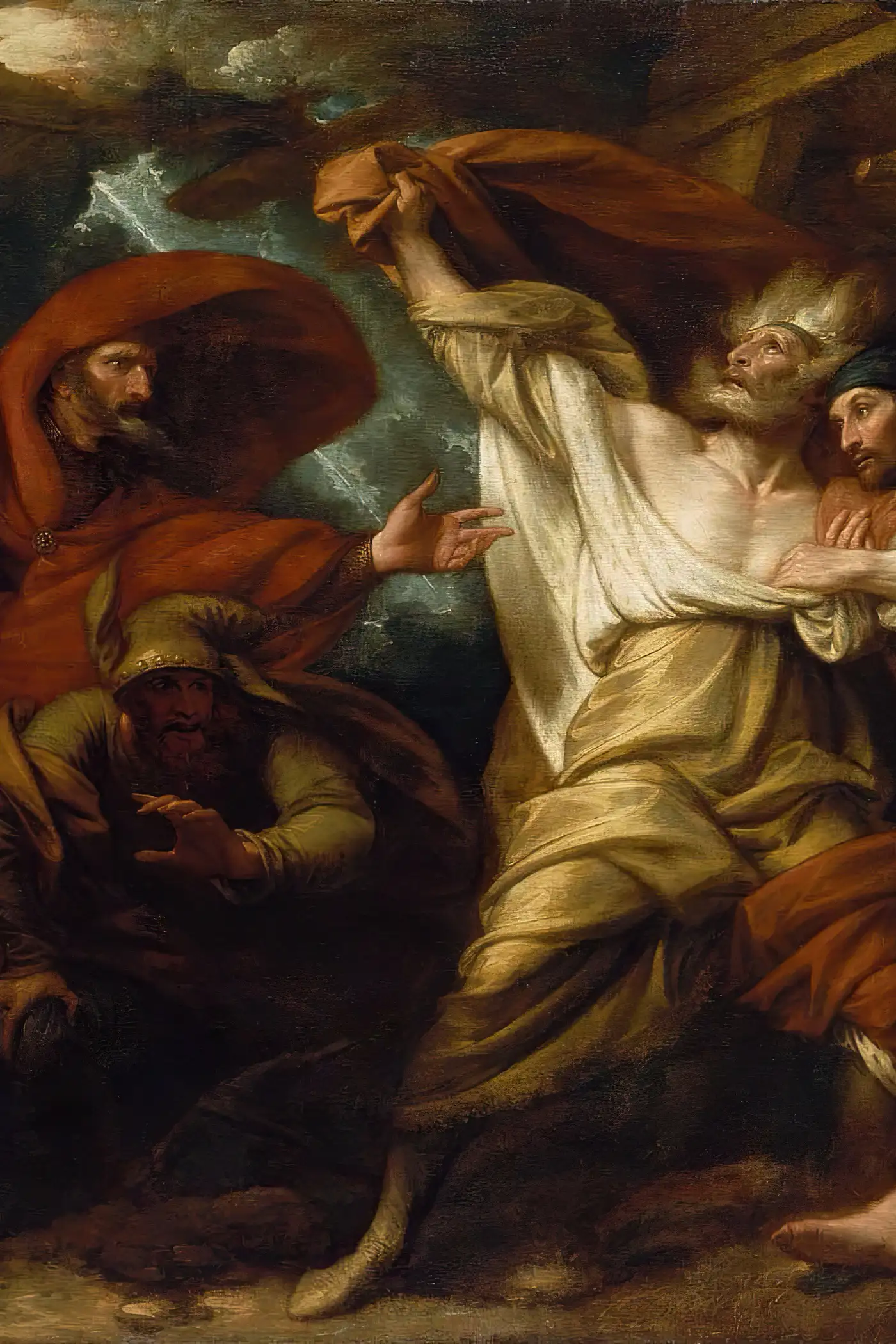
King Lear is a tragedy by Shakespeare , written about 1605 or 1606. Shakespeare based it on the legendary King Leir of the Britons, whose story is outlined in Geoffrey of Monmouth’s pseudohistorical History of the Kings of Britain (written in about 1136). The play tells the tale of the aged King Lear who is passing on the control of his kingdom to his three daughters. He asks each of them to express their love for him, and the first two, Goneril and Regan do so effusively, saying they love him above all things. But his youngest daughter, Cordelia, is compelled to be truthful and says that she must reserve some love for her future husband. Lear, enraged, cuts her off without any inheritance. The secondary plot deals with the machinations of Edmund, the bastard son of the Earl of Gloucester, who manages to convince his father that his legitimate son Edgar is plotting against him. After Lear steps down from power, he finds that his elder daughters have no real respect or love for him, and treat him and his followers as a nuisance. They allow the raging Lear to wander out into a storm, hoping to be rid of him, and conspire with Edmund to overthrow the Earl of Gloucester. The play is a moving study of the perils of old age and the true meaning of filial love. It ends tragically with the deaths of both Cordelia and Lear—so tragically, in fact, that performances during the Restoration period sometimes substituted a happy ending. In modern times, though, King Lear is performed as written and generally regarded as one of Shakespeare’s best plays. This Standard Ebooks edition is based on William George Clark and William Aldis Wright’s 1887 Victoria edition, which is taken from the Globe edition.
Main themes in King Lear
Aging and mortality
In King Lear, aging and mortality provides a lens for understanding the story's core message.
Family betrayal
In King Lear, family betrayal provides a lens for understanding the story's core message.
Madness and wisdom
King Lear thoughtfully explores madness and wisdom through its central conflicts.
Nature versus civilization
Nature versus civilization emerges as a defining element in King Lear, shaping character development.
Why King Lear is still relevant today
King Lear is often considered Shakespeare's most profound tragedy, a searing examination of aging, family betrayal, and cosmic injustice. Its depiction of a powerful man losing everything—kingdom, sanity, daughters—speaks to universal fears about mortality and abandonment. The play's bleak vision has resonated particularly in the modern era, influencing works from Beckett to contemporary explorations of dementia and elder care.
More by this author
Frequently Asked Questions
What is King Lear about?
King Lear follows the aging king who divides his kingdom between daughters based on their flattery. Rejected by the two who inherit and cast out by them, Lear descends into madness on the heath, ultimately reconciling with his honest daughter Cordelia before tragedy strikes.
Why does King Lear divide his kingdom?
Lear wants to retire from ruling while retaining royal dignity. His test of his daughters' love reflects his vanity and desire for reassurance in old age—a decision that reveals the difference between genuine love and mere words.
Is King Lear Shakespeare's greatest play?
Many scholars and critics consider King Lear Shakespeare's most profound work, surpassing even Hamlet in its philosophical depth and emotional devastation. Its unflinching examination of suffering has made it particularly valued in the modern era.
What happens at the end of King Lear?
The play ends in catastrophe: Cordelia is hanged, and Lear dies of grief over her body. The kingdom is left to those who survived, but there is no restoration of order—only devastation and the suggestion that life can be meaninglessly cruel.