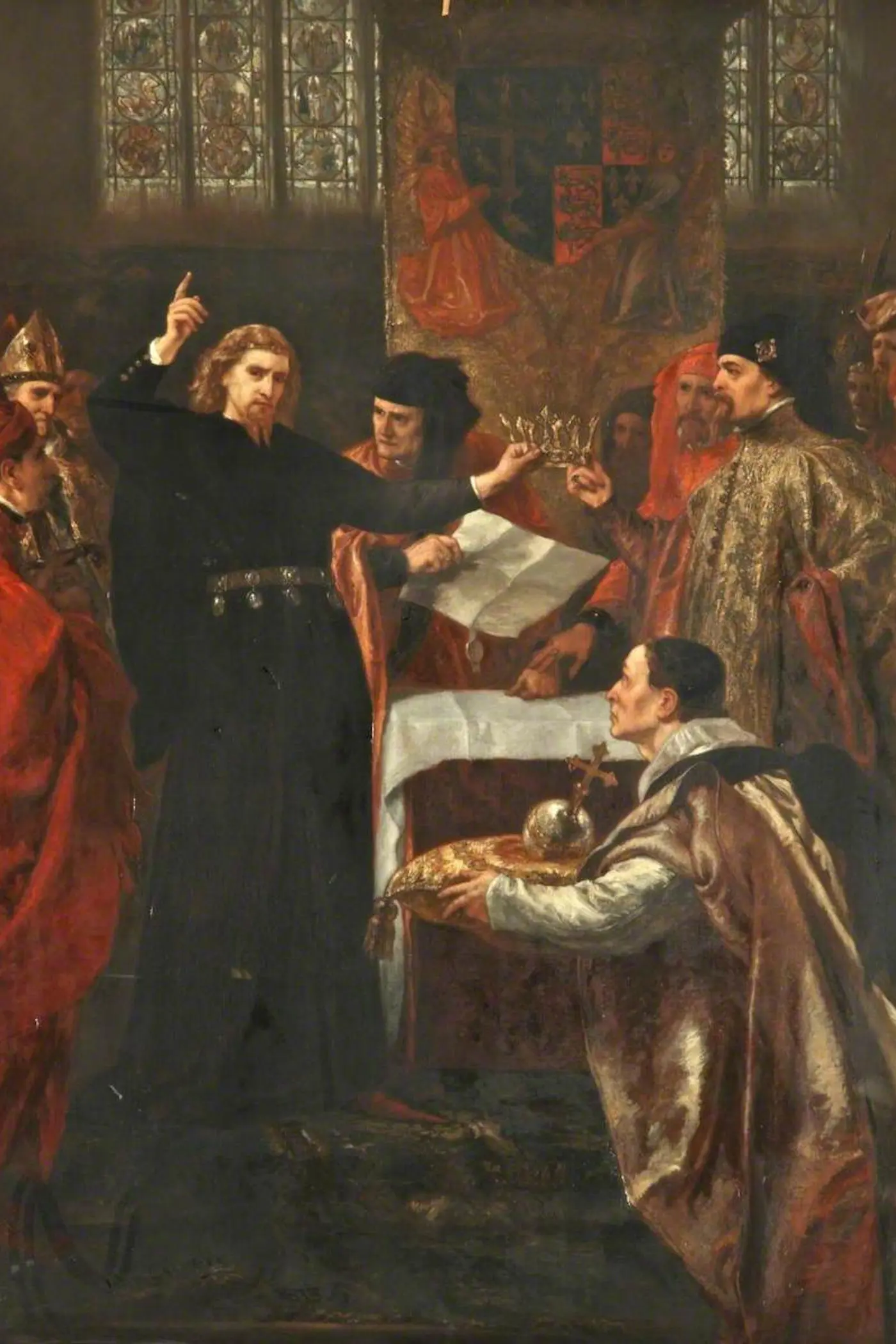
Richard II
What is Richard II about?
Against the advice of his counselors, Richard II has been taking money from England’s coffers and spending it on fashion and close friends. In order to continue his wasteful spending, he raises taxes on the commoners and leases portions of English land to wealthy noblemen. He also sees an opportunity to seize more land and money after hearing news of John of Gaunt’s failing health. King Richard arrives at Windsor Castle to settle a dispute between Henry Bolingbroke, the Duke of Hereford and son of John of Gaunt, and Thomas Mowbray, the Duke of Norfolk. Bolingbroke accuses Mowbray of numerous counts of treason: embezzling funds for Richard’s soldiers, conspiring against the king for the past eighteen years, and murdering the Duke of Gloucester. Mowbray denies these charges and claims to have repented for any wrongs he has caused in the past. John of Gaunt tries to convince the two to reconcile, but his attempts fall on deaf ears. Richard determines that a trial by combat will settle the matter. This Standard Ebooks edition is based on William George Clark and William Aldis Wright’s 1887 Victoria edition, which is taken from the Globe edition.
Main themes in Richard II
Kingship and legitimacy
Richard II thoughtfully explores kingship and legitimacy through its central conflicts.
Language and identity
Richard II thoughtfully explores language and identity through its central conflicts.
Power and usurpation
The presence of power and usurpation in Richard II connects readers to its enduring relevance.
Divine right and reality
Richard II thoughtfully explores divine right and reality through its central conflicts.
Why Richard II is still relevant today
Richard II is Shakespeare's most poetic history play, examining divine right kingship and the crisis of legitimate authority. Richard's fall and Bolingbroke's rise begins the chain of events culminating in the Wars of the Roses. The play's meditation on the nature of kingship, ceremony, and self-fashioning speaks to questions of political legitimacy that remain urgent.
More by this author
Frequently Asked Questions
What is Richard II about?
Richard II dramatizes the deposition of King Richard by his cousin Henry Bolingbroke, who becomes Henry IV. Richard's mismanagement and seizure of Bolingbroke's inheritance lead nobles to support Bolingbroke's return from exile, ending in Richard's abdication and murder.
Is Richard II the same as Richard III?
No. Richard II (1367-1400) and Richard III (1452-1485) were different kings separated by nearly a century. Richard II was deposed by Henry IV; Richard III was the last Yorkist king, defeated by Henry VII. Shakespeare wrote separate plays about each.
Why was Richard II controversial?
The deposition scene was censored in early printings because showing a monarch's removal was politically sensitive. Elizabeth I famously said "I am Richard II, know ye not that?" when supporters of the Earl of Essex paid for a performance before his rebellion.
What is the Garden Scene in Richard II?
In Act 3, gardeners compare England to an untended garden overgrown with weeds under Richard's mismanagement. The allegory reflects Elizabethan views of the kingdom as an organic body requiring proper cultivation by its ruler.