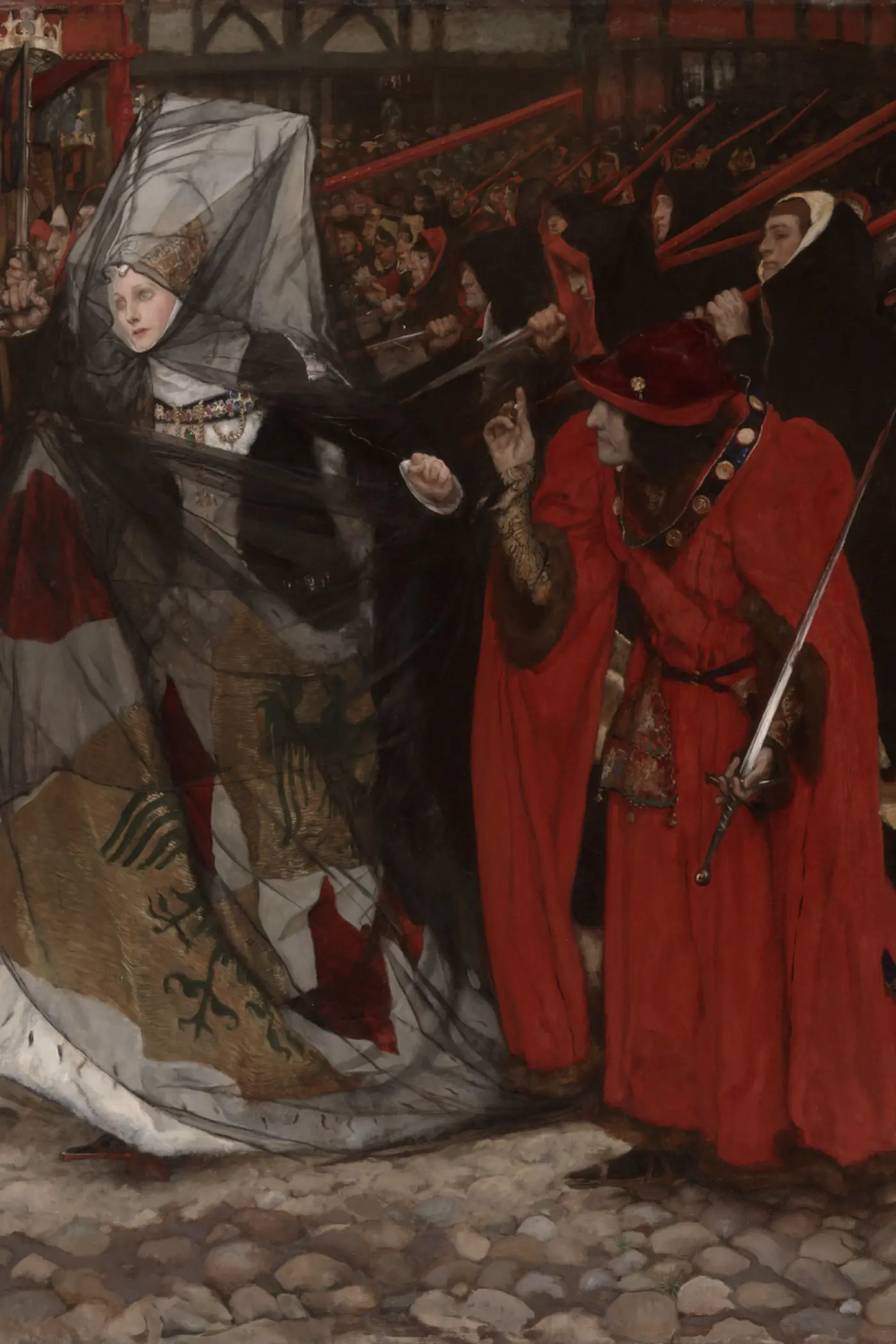
Richard III
What is Richard III about?
After the bloody battle at Tewksbury and the second dethroning of Henry VI, England and its citizens are finally able to enjoy peace under the reign of Edward IV. The remaining Lancastrian leaders are either killed or scattered to the four winds. Within the kingdom, not everyone is happy with their new king—and when Edward falls ill, his power-hungry brother Richard, the Duke of Gloucester, sees his chance and prepares to kill anyone who stands between him and the throne. Richard puts into play numerous schemes to eradicate the line of succession and control the court. The first victim is King Edward’s other brother, Clarence. Rumors lead to Clarence’s imprisonment in the Tower of London, and Richard sends two murderers to stab him to death. This causes Edward’s health to worsen, and the title of Protector falls to the remaining brother. Next on Richard’s hit list is Lord Hastings, the loudest voice to object to Richard’s accession, and who is promptly arrested and executed for treason. As Richard orchestrates murder after murder, the deaths start coming back to haunt him. This Standard Ebooks edition is based on William George Clark and William Aldis Wright’s 1887 Victoria edition, which is taken from the Globe edition.
Main themes in Richard III
Ambition and villainy
The presence of ambition and villainy in Richard III connects readers to its enduring relevance.
Power and legitimacy
In Richard III, power and legitimacy provides a lens for understanding the story's core message.
Deformity and identity
The presence of deformity and identity in Richard III connects readers to its enduring relevance.
Performance and deception
Performance and deception emerges as a defining element in Richard III, shaping character development.
Why Richard III is still relevant today
Richard III features Shakespeare's most electrifying villain, a self-aware schemer who takes the audience into his confidence. Richard's theatrical manipulation of everyone around him while winking at viewers has influenced depictions of charismatic evil from Iago to modern film villains. The 2012 discovery of Richard's actual remains renewed interest in separating historical fact from Tudor propaganda.
More by this author
Frequently Asked Questions
What is Richard III about?
Richard, Duke of Gloucester, schemes his way to the English throne by eliminating rivals including his own brothers and young nephews. His tyranny alienates supporters, and he is defeated by Henry Tudor at Bosworth Field, ending the Wars of the Roses.
Was Richard III really evil?
Shakespeare's villainous Richard reflects Tudor propaganda. The historical Richard's reputation is debated: some evidence suggests he was a capable administrator whose reputation was destroyed by his successors. The 2012 discovery of his skeleton revealed his scoliosis but not his character.
What is Richard III's deformity?
Shakespeare portrays Richard with a hunched back and withered arm, symbols of inner corruption. The real Richard had scoliosis but not a withered arm. His physical difference in the play represents his moral deviation from nature.
What does A horse! A horse! My kingdom for a horse! mean?
Richard's desperate cry at Bosworth Field shows his kingdom reduced to nothing—his grand ambitions worth less than a horse to escape defeat. It's become proverbial for any frantic need for something ordinary in a crisis.